My Words, My World

First drafts – A few pages in the large wilderness of the world of writing

Archive for the category “Fiction”

Lost for words

Welcome to the Advent Calendar Story Train, where you can read through 24 stories under this year’s theme, “Lost”.

Nick sits at his desk; elbow bent and his face in his hands. The once-steaming cup of coffee has now cooled but he ignores it, or forgets about it.

The calendar above his head has a large, Stabilo-pink ring around the 20th. He used to love the thrill of the challenge of producing work for deadlines, now he just feels a knotted stomach. His computer screen shows a document page. Empty.

            With a sigh, he withdraws his face from his hands and stands up, finally noticing the coffee, which he drinks, ignoring the fact that it’s almost cold. He walks over to the Advent Calendar and opens the little window. Inside, there’s a picture of a candle blazing. He sits down and takes his diary.

December 10

Brain fog. Clouds in my brain clouding my brain. I feel like a rowing boat without oars with no idea where or if I’m going. The calendar above my head is a weight on my shoulders.

            Fingers swarm over keys and the keyboard taps away. He stops and looks up at the screen, eyes moving across the page. He looked down at the one key that mattered. He pressed it and watched the words disappear. The short story for the year-end anthology remained unwritten. And time was closing in.

December 12

I feel like a literary eunuch, I’ve been castrated and my words fire blanks. Mr No-Nuts is at the keyboard again.

A paragraph, flat, lifeless and automated, empty words about a lonely Christmas on a lighthouse in the middle of a raging storm. Who gives a toss about lighthouse keepers at Christmas, when everyone’s on the sauce and wrapping presents? His new-found friend, the Delete key, came to the rescue. Whatever he wrote no longer seemed to be his. The thought was like a splinter: I have forgotten how to write like me.

A soft chime startled him. An email, from his editor, Annie. He read the subject line: Checking In – December Story. He opened the mail and read the rest. She was her usual bright and breezy self, something he had once adored about her but now her enthusiasm felt like a punch in the stomach.

Nick got up and walked around the room. He needed a distraction and found it in the box he’d brought down from the loft; decorations from Christmases past. It was time to throw out the old, and since his parents were no longer, he decided now would be the right time.

He opened the box; a couple of old Christmas cards, mangy tinsel, baubles scratched dull. And the manger. He hadn’t thought about that for years. The little wooden manger passed down from grandfather to father to son that used to sit on the mantlepiece. Except, there was no manger. He tipped the box out on the table. Nothing. It wasn’t there. All thoughts of the story deadline disappeared as he raked through the contents of the box laid out on the table. His grandfather had made it while being held as a prisoner of war and now it was missing.

            With shaking hands, he threw everything back in the box. Eyes wide, he staggered from the room and climbed into the loft. There were other boxes, all marked with their contents. Kitchen, Nick – Baby, Books. He opened every one. He sat in a growing pile of family history as he inspected each box. Desperate, he reached the last one, Odds and sods. His hand pulled out scraps of cloth, paper glue and anything else his mother used for her bricolage hobby. He rummaged through the box.

            His hand closed on a familiar shape.

            With care, he pulled his hand from the box. He held the manger, discoloured, scratched and missing a few details, up to the light of the window. Forgetting the mess around him, he went back downstairs and placed the manger on the mantlepiece, where he’d always remembered it. As he lifted his fingers, the little wooden roof of the manger came off. He turned it over in his fingers, looking at the broken joint. Under the roof were three words, carved under the harshest conditions.

            NEVER LOSE FAITH

            The message was not lost on Nick. He had made a career from his writing, earned money from his words and now, here he was, a blank page for his efforts.

            From a drawer he took a tube of glue and repaired the manger’s roof before placing it on the mantlepiece. Then, with a sense of calm, he started clearing away the mess he had created, one ordered box at a time, until everything was back in its place.

            He took one look at the blank screen, closed his eyes for a few seconds, then turned the computer off.

December 15

That strange sense of calm of doing bugger all, even when the clock is ticking and there is expectation. This mad mariner tale no longer interests me. I hope a seagull shits on his head for Christmas.

December 16

I do nothing, except laze around the house, read and sometimes look at the ornament.   

December 17

I keep analysing my grandfather’s message scrawled into his creation at a time when faith was probably the only thing he had. Faith in who, or what?

December 19

Dear diary, thank you for being there. Grandad’s message never leaves me and here I am with, selfishly, only faith in myself. Not in my empty words but in my diary pages. It’s me in there. I’d lost me, myself.

He opened a new document and typed the title: An Advent Adventure.

No lighthouses or lonely Christmases, he wrote about the fear, pain, and loathing on a blank page, and purpose found among lost things. The story was short, imperfect, heartfelt, and his.

The next morning, deadline day, he read it once and pressed the Send key.

A scratched message, like the scratch of a pen on paper, gave lost words a voice.

The end

Thank you for reading today’s story. The next story will be available to read sometime on the 19th December, titled “Lost Project. This link will be active tomorrow when the post goes live.

If you missed yesterday’s you can go and read it here.
99-word story: The Empty Chair

This week’s 99-word story is called The Empty Chair. Why? Well, that’s for you to decide.

___________________________________________________________________________________________

You know the worst thing about an empty chair? It rhymes with “no one there”, or worse, “where?”.  

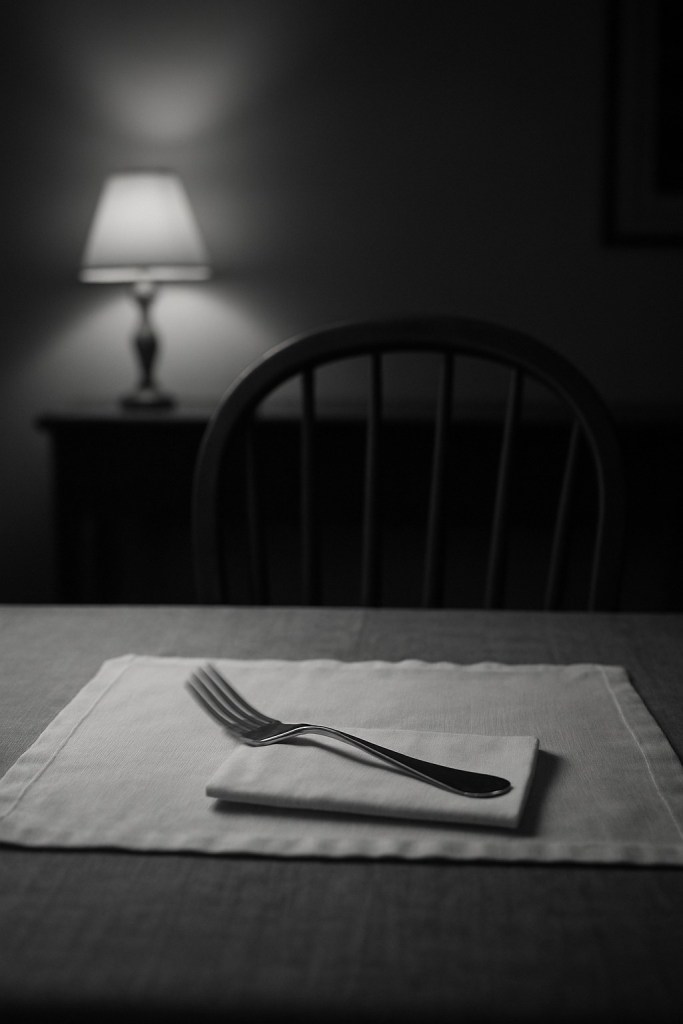
There’s a place at the table where normally there’s a place mat, napkin, cutlery. Maybe a glass for the wine. 

Instead, just a piece of table cloth with nothing on it. 

No sitting down to grace, not that we ever did. No talk about the day, the weekend or whatever. 

The habit of turning my head, forkful of food in mid-air and talking. Now I just stare, straight ahead. And wonder.

You see, it’s not the empty chair. It’s the waiting.

The current image has no alternative text. The file name is: the-empty-chair.jpg

99-word story: Leaving

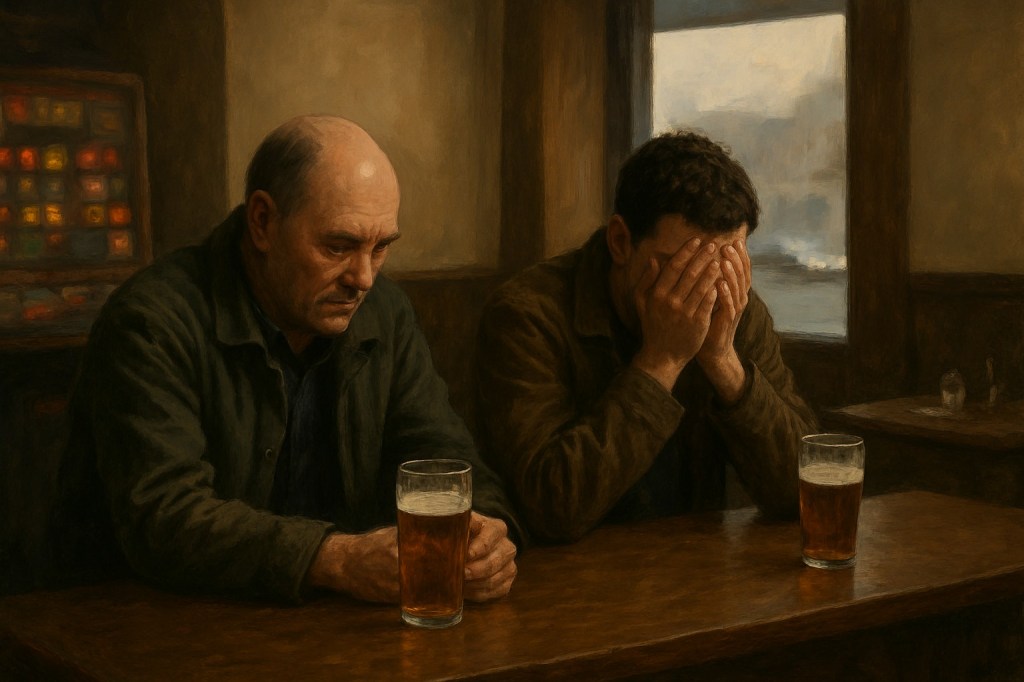
The two men sat at the bar. From the other room came the rattle of a fruit machine and the clink of dishes.

Their beers stood mostly full.

The older man stared at his hands. The younger one watched the traffic pass and shrink into the distance.

“You sure you’re ready?” the older man said.

The younger man rubbed his eyes with both hands.

“It’s not me that decides. The decision’s been made. Guess I’d better get used to taking orders.”

He paused.

“I just hope I make it back.”

The older man nodded.

“Me too. Your mother especially.”

The current image has no alternative text. The file name is: leaving.jpg

99-word fiction – Cannibal

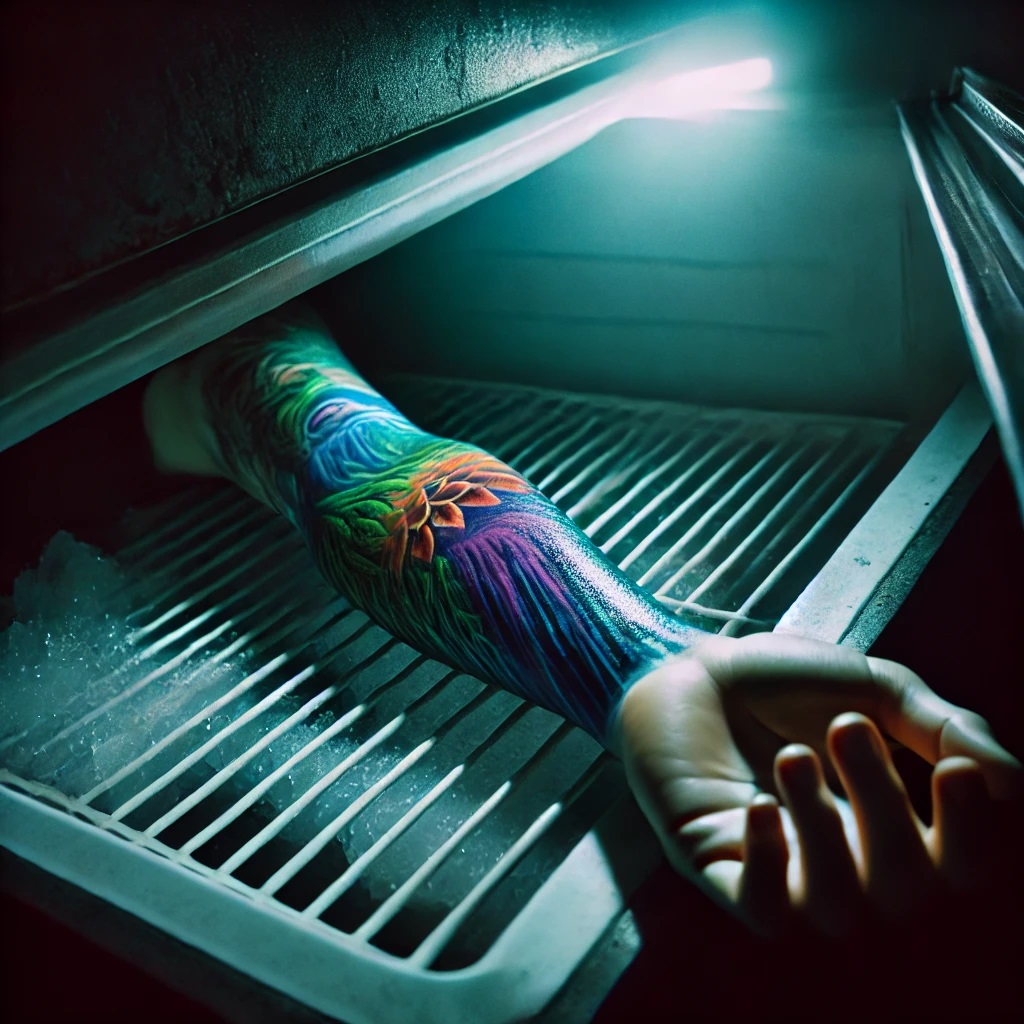
I first noticed her tattoo; it was beautiful, a waterfall of colour. She saw me looking and held up her empty glass, waving it at me.  I bought her a drink.

“I love your tattoo.”

She smiled.

Beer followed beer then whisky followed the beer. I must have charmed her; we finished the evening at my place. That was three months ago, and we’re still here.

The tattoo is beautiful. I sit looking at its waterfall of colour and touch it, delicately. Her skin is cold to the touch. It’s the only part of her left in the freezer.

The current image has no alternative text. The file name is: cannibal.jpg

99-word fiction – Dying for a drink

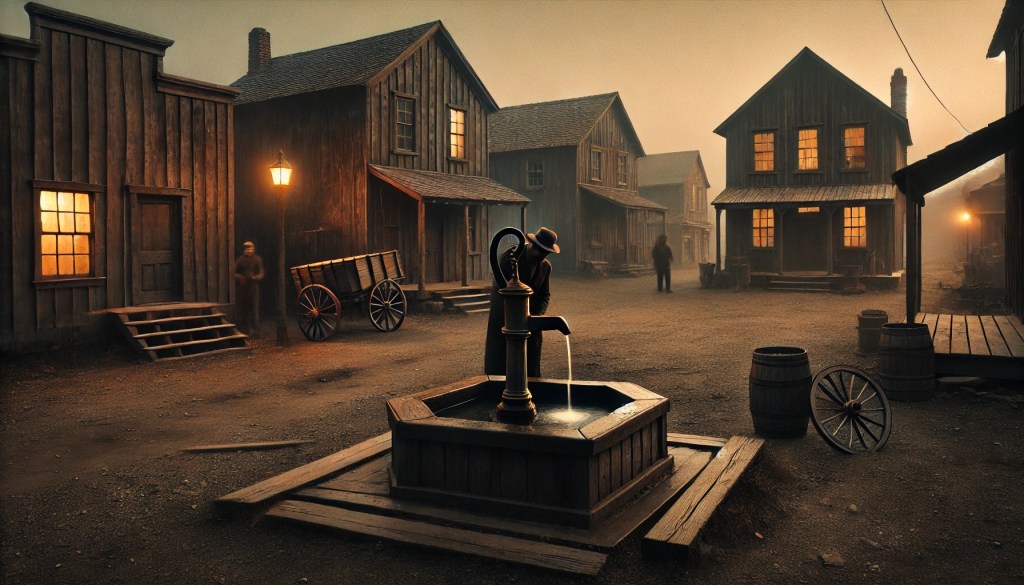
I dragged my feet over the outskirts of a dusty, run-down town. Silence, total and desolate, greeted me and my fear went before me like my shadow. I would have called out but my lips were cracked and my throat was dry. My tongue felt like leather. I fell and crawled towards the town square. No one stepped out to help me, nor did any curtain twitch.  There was a water pump in the square. I looked around. I was alone. I winced as the metal pump screeched. I had to drink.

Then I heard the first shuffling footsteps.

The current image has no alternative text. The file name is: dying-for-a-drink.jpg

99-word fiction – Moonlight

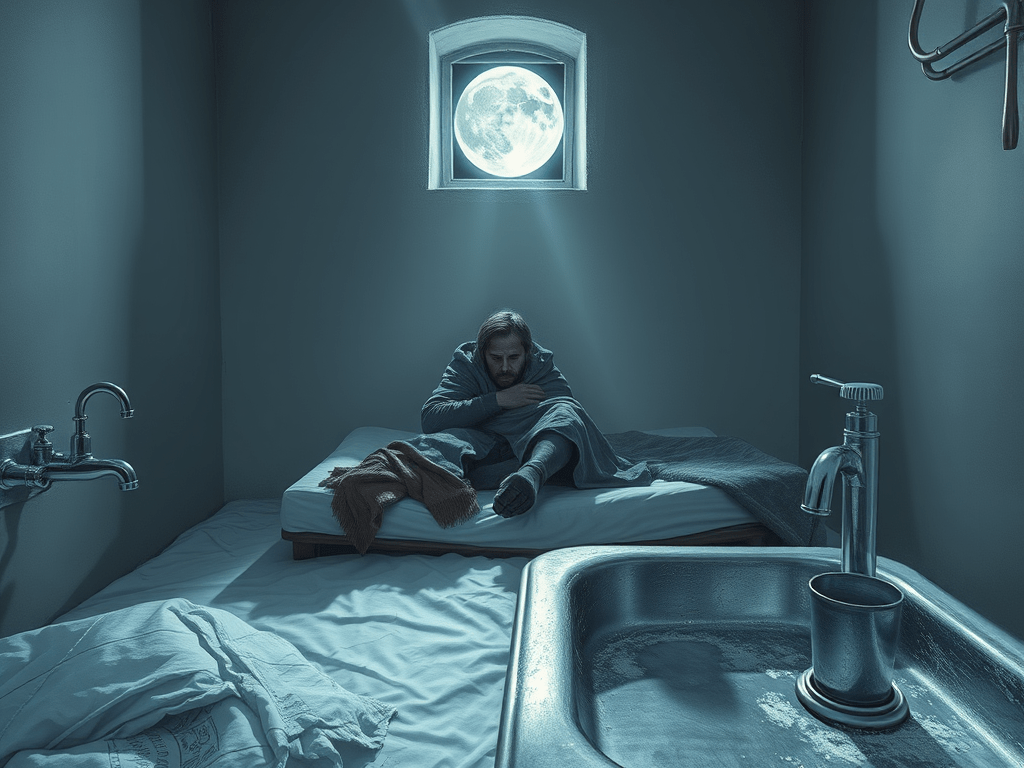
The full moon lit the winter sky, its cold light streamed through the small window high above the man’s head, and illuminated the white walls which turned the night to day, and glinted off the chrome taps on the steel basin. Even his tin cup of water shone with a small square of light. The man couldn’t sleep, his back felt every lump under the thin mattress. He pulled the blanket around his cold body.

He had once counted the passing of the full moon but had long ago accepted he would never walk free in the moonlight again.

The current image has no alternative text. The file name is: image-2.png

Blood is Thicker than Ink

Welcome to the Advent Calendar Story Train, where you can read through 24 stories under the theme Surprise.

Jane sits at her desk at the front of the class. Following the expected high spirits before the Christmas holidays the class has now settled down and she can concentrate on marking their homework. She takes a moment to listen to the sleet lightly slap the window.

On her desk is a piece of A4 paper, its lines filled with neat, slanted writing in black ink, and the effect makes her tilt her head a little. In her hand is a red pen; and she doesn’t know where to start. She’s afraid to take her pen to the page, to leave ragged red scars and ruining the beauty of the writing.

But beauty is only skin deep, she thinks. It’s the content that counts.

Still her pen remains suspended over the page, as if defying her. She can’t understand where the problem lies; after all, everyone else had had little problem with the homework. At (almost, she tells herself) 16 years of age, the girl, Christine, should be more than capable of writing chapter summaries for The Grapes of Wrath. Spelling mistakes abounded and she still had problems with basic grammar. Jane thought back to her own childhood, how her mother had transmitted her love of English to her. A mother’s love. Even after what had happened, her mother’s love had remained constant. How she missed her mother. Jane sighs, then brings the red pen to bear.

The red pen stops its Bic blitzkrieg, and Jane thinks back to that chat with Christine earlier that term, just the two of them, and just after Jane had arrived at the school (There was only ever this school, she tells herself); teacher and student discussing the latter’s plans after leaving school.

‘I wanna be a journalist,’ the girl had said.

Jane is a great believer in optimism but concedes a limit must exist. The girl wanted to study journalism yet she could hardly construct a paragraph that didn’t require red biro butchery. She wouldn’t even get on one of the tabloids.

Jane had been digging that day and the chat had revealed more than anticipated. Christine was having a hard time of it at home. Being the eldest child, responsibility fell on her shoulders and she had to take care of the children while she should have been studying but her mother, (Mother!), was out and about and up to who knew what.

Looking down at the page, Jane too feels the weight of responsibility and wonders what she can do to help. A Christmas miracle, maybe, she thinks before making another note in the margin on the use of the apostrophe. Christine, we really need to look at the work you’re producing and how we can… improve it. There, that was tactful. Improve it.

Christina sits and writes, ignoring the class and the weather outside. She hates Christmas; why had she been born on Christmas Day? She couldn’t think of a worse day for a birthday.

The slap of sleet has given way to the patter of large snowflakes and the class, with their low ‘oohs’ and ‘ahs’ is now distracted. So is Jane. The only head that isn’t turned to the window is Christine’s, which is still down as she continues to write, which she does until the bell goes. Everyone is off their feet, with cries of “Happy Christmas, Miss” and out the door by the time Christine stops writing. Jane waits.

‘Christine, can I just have a moment, please?’

Jane walks over and closes the door. She comes back and sits on the desk in front of Christine and takes a deep breath.

‘Look, when you come back in January you’ll be in your last term before your exams.’ She hands Christine the homework and lets her read her comments. ‘If you can’t get these basics right, you’ll…’ “Fail” was too strong a word. ‘You’ll struggle in the exam. This is the one subject you need to have in the bag if you want to go on to study journalism, Christine.’

Christine looks up from the wave of red scrawl.

‘I will study journalism. I have to. I can’t fail. I won’t fail.’ Her shoulders sag and her head drops and rests on her upturned hands, elbows on the desk for support. She chokes back a sob. ‘I just can’t find the time to study.’

Jane wants to reach out and offer comfort. She needs to be practical.

‘So, let me help you find the time to study. Let’s say two hours a week.’

Christine’s head, still down, shakes a little.

‘I can’t. When I don’t have to look after the kids I work at the café twice a week. I can’t even afford to lose the pittance they pay.’

‘I know,’ says Jane, and Christine looks up, frowning. She opens her mouth, but Jane holds up her hand. ‘How much do they pay you?’

Christine’s eyes widen.

‘How much?’

Stung by the question’s directness Christine drops her stare. ‘Six quid an hour, four hours a week. Why? What’s it got to do with…’

Jane’s hand goes up again.

‘I’ll cover it. We’re more alike than you think. I too can’t fail. I won’t fail and you will pass this exam.’

‘But why would you do something like this for me? Why would anyone look out more me like that?’

It’s now or never, thinks Jane and her hand reaches across the table. At first Christine’s hand is reluctant but then surrenders.

A mother’s love. Her mother’s love. Memories come flooding back. The affair, his arrest, the sacking, his career lying in tatters. Jane the 15-year-old, pregnant by her English teacher, forgiven by her mother and finally giving birth on the day her classmates were at home unwrapping their presents. A mother’s love.

‘On Christmas Day, it’ll be 16 years that I’ve been looking out for you.

The end

Thank you for reading today’s story. The next one will be available to read on December 17th, titled “A Disappointing Surprise“. This link will be active tomorrow when the post goes live.

If you missed yesterday’s you can go and read it here.
Blood is Thicker than Ink

Welcome to the Advent Calendar Story Train, where you can read through 24 stories under the theme Surprise.

Jane sits at her desk at the front of the class. Following the expected high spirits before the Christmas holidays the class has now settled down and she can concentrate on marking their homework. She takes a moment to listen to the sleet lightly slap the window.

On her desk is a piece of A4 paper, its lines filled with neat, slanted writing in black ink, and the effect makes her tilt her head a little. In her hand is a red pen; and she doesn’t know where to start. She’s afraid to take her pen to the page, to leave ragged red scars and ruining the beauty of the writing.

But beauty is only skin deep, she thinks. It’s the content that counts.

Still her pen remains suspended over the page, as if defying her. She can’t understand where the problem lies; after all, everyone else had had little problem with the homework. At (almost, she tells herself) 16 years of age, the girl, Christine, should be more than capable of writing chapter summaries for The Grapes of Wrath. Spelling mistakes abounded and she still had problems with basic grammar. Jane thought back to her own childhood, how her mother had transmitted her love of English to her. A mother’s love. Even after what had happened, her mother’s love had remained constant. How she missed her mother. Jane sighs, then brings the red pen to bear.

The red pen stops its Bic blitzkrieg, and Jane thinks back to that chat with Christine earlier that term, just the two of them, and just after Jane had arrived at the school (There was only ever this school, she tells herself); teacher and student discussing the latter’s plans after leaving school.

‘I wanna be a journalist,’ the girl had said.

Jane is a great believer in optimism but concedes a limit must exist. The girl wanted to study journalism yet she could hardly construct a paragraph that didn’t require red biro butchery. She wouldn’t even get on one of the tabloids.

Jane had been digging that day and the chat had revealed more than anticipated. Christine was having a hard time of it at home. Being the eldest child, responsibility fell on her shoulders and she had to take care of the children while she should have been studying but her mother, (Mother!), was out and about and up to who knew what.

Looking down at the page, Jane too feels the weight of responsibility and wonders what she can do to help. A Christmas miracle, maybe, she thinks before making another note in the margin on the use of the apostrophe. Christine, we really need to look at the work you’re producing and how we can… improve it. There, that was tactful. Improve it.

Christina sits and writes, ignoring the class and the weather outside. She hates Christmas; why had she been born on Christmas Day? She couldn’t think of a worse day for a birthday.

The slap of sleet has given way to the patter of large snowflakes and the class, with their low ‘oohs’ and ‘ahs’ is now distracted. So is Jane. The only head that isn’t turned to the window is Christine’s, which is still down as she continues to write, which she does until the bell goes. Everyone is off their feet, with cries of “Happy Christmas, Miss” and out the door by the time Christine stops writing. Jane waits.

‘Christine, can I just have a moment, please?’

Jane walks over and closes the door. She comes back and sits on the desk in front of Christine and takes a deep breath.

‘Look, when you come back in January you’ll be in your last term before your exams.’ She hands Christine the homework and lets her read her comments. ‘If you can’t get these basics right, you’ll…’ “Fail” was too strong a word. ‘You’ll struggle in the exam. This is the one subject you need to have in the bag if you want to go on to study journalism, Christine.’

Christine looks up from the wave of red scrawl.

‘I will study journalism. I have to. I can’t fail. I won’t fail.’ Her shoulders sag and her head drops and rests on her upturned hands, elbows on the desk for support. She chokes back a sob. ‘I just can’t find the time to study.’

Jane wants to reach out and offer comfort. She needs to be practical.

‘So, let me help you find the time to study. Let’s say two hours a week.’

Christine’s head, still down, shakes a little.

‘I can’t. When I don’t have to look after the kids I work at the café twice a week. I can’t even afford to lose the pittance they pay.’

‘I know,’ says Jane, and Christine looks up, frowning. She opens her mouth, but Jane holds up her hand. ‘How much do they pay you?’

Christine’s eyes widen.

‘How much?’

Stung by the question’s directness Christine drops her stare. ‘Six quid an hour, four hours a week. Why? What’s it got to do with…’

Jane’s hand goes up again.

‘I’ll cover it. We’re more alike than you think. I too can’t fail. I won’t fail and you will pass this exam.’

‘But why would you do something like this for me? Why would anyone look out more me like that?’

It’s now or never, thinks Jane and her hand reaches across the table. At first Christine’s hand is reluctant but then surrenders.

A mother’s love. Her mother’s love. Memories come flooding back. The affair, his arrest, the sacking, his career lying in tatters. Jane the 15-year-old, pregnant by her English teacher, forgiven by her mother and finally giving birth on the day her classmates were at home unwrapping their presents. A mother’s love.

‘On Christmas Day, it’ll be 16 years that I’ve been looking out for you.

The end

Thank you for reading today’s story. The next one will be available to read on December 17th, titled “A Disappointing Surprise“. This link will be active tomorrow when the post goes live.

If you missed yesterday’s you can go and read it here.
In the corner

Following my recent negativity, two days ago I started writing a small fiction piece, something I haven’t done for a while.  I wanted it to be light, happy and, I suppose, a little seasonal, despite my humbug sentiments which came through in my last couple of (apparent) poems. I wanted it finished for today, for a reason.

________________________________________________________________________________

A small triangle of light fell across the boy’s face and he opened one eye, squinting.  He looked at the gap in the curtains.

He threw the covers back and stuck his head through the gap; pale blue greeted him and not a cloud in sight. A perfect day for playing football in the park or riding his bike, if he wrapped up properly and his mother would see to that.  He climbed off the bed, put on his dressing gown and picked up the comic he had been reading the night before, his feet finding his slippers as he shuffled out of the room, ignoring what lay in the corner.  His mother was waiting for him, a box of cereal in her hand. The curtains were still drawn.

“Good morning, sunshine.  You’ve a face as long as your dressing gown.  What’s up?”

She placed the box on the table. Billy was still wondering about the curtains. He sighed.

“It’s meant to be winter, Mum.  We still haven’t had any snow, it’s just sunny all the time.”

He didn’t notice her smile that appeared and disappeared while he poured milk on his breakfast.

“You should be happy.  You can go out to play.”

He shrugged.

“Dad said it was going to snow at Christmas, and it didn’t.”

“He’s not the weatherman, love.”

“Then he said it would on boxing Day.”

“He must have heard it from somewhere, Billy.”

“It’s now New Year’s Day and it’s still sunny.”

She picked the tea-towel from its hanger just as the cat jumped through the cat-flap, shaking herself.  Billy didn’t notice.

“So, you looked out of your window?”

He spooned the last of the cereal into his mouth and finished chewing before he answered, to his mother’s delight.

“I do it every morning and it’s always the same.”

“Your little window, in your room at the back of the house?”

He scratched his head and wondered if she’d been at the sherry, like she had on Christmas morning.  He opened the comic where he’d finished the night before. She turned the light off.

“Mum. I can’t read in this dark.”

“Open the curtains then, love.  I’ve got my hands full.”

He frowned.  Well, he supposed she did have a tea-towel in her hand. She was definitely acting strange.  He put the comic down, walked over to the window and opened the curtain.  His surprise was audible.  Grey sky greeted him and the first flakes of snow were already falling.

“But how…?”

“It’s been threatening a while but your little window looks out in the opposite direction.”

He stood, hand on the curtain, smiling as the snow became heavier.  The grass on the lawn was changing colour.

“Mum, it’s starting to set.”

“You’ll soon be able to throw snowballs and make snowmen.”

Laughing, he left his comic on the table and ran upstairs, throwing open his bedroom door.  He looked in the corner where his prize Christmas present, his new wooden sledge, waited for him.

Sunrise (I wanna sleep)

“The sun’s coming up.”

“What?”

“The sun’s coming up.”

“It does that, in the morning.”

“Wanna take a look?”

“No, I want to sleep.”

“You should see it, the colours and everything.”

“Pink.  It’s bound to be pink.  Go to sleep.”

“How do you know what colour it is?”

“Because it’s always pink.  Clear sky, pink clouds, pink sunrise. Pink.”

“I’ve seen sunrises that aren’t pink.”

“I’m happy for you, really.  So, get up or go to sleep, either way I don’t care about the pink sunrise.”

“You should you know.  After all, it may be your last.”

“What?”

“Well, we don’t know, do we?”

“Well that’s a cheery fucking thought.  Thanks for that. How am I going to sleep now?”

“Just think, it could be your last sunrise and you’re missing it because you want to stay in bed and sleep.”

“So then just think, it would also be my last sleep and I’m missing it watching a bloody pink sunrise.  Go to sleep!”

Hats off to Raymond Chandler

“Imitation is the sincerest form of flattery that mediocrity can pay to greatness.” So said Oscar Wilde.

While I hope my work isn’t mediocre, I can understand the sentiment behind the statement.  We who doff our caps at others are acknowledging something which we appreciate and would probably like to do or achieve.

I have a weakness for reading Raymond Chandler.  Every once in a while I’ll return to any one of a number of books on my shelf.  A great writer.  By all accounts a greater drinker also, but that’s neither here nor there.  I’ve always loved reading Chandler and, not so long ago, as an idea to ‘unblock’, I wrote a small, Chandleresque sketch. It only runs to 68 words but after doing so I found a new impetus to my writing.

I hope you don’t find it too mediocre…


She offered me a coffee.  I took it like a man.  Black, no sugar; like my mood.  I don’t know which discount supermarket she’d bought it from but even with hot water added it was as dry as a Saharan wind.  I managed to drink it without pulling any expression except appearing concentrated on what she was saying, which wasn’t much.  Her words flowed like an uphill stream.

50-word story

“It wasn’t me.”
“What do you mean, it wasn’t you; you were seen.”
“By who?”
“Someone.”
“Who?”
“Did you do it?”
“No.”
“Do you have an alibi?”
“No.”
“I’m gonna have to take you down.”
The accused raised two stumps for wrists.
“But you said she was strangled.”

The Seeker

In all my years as a detective on the Kent police force where, admittedly, I wasn’t inundated with out-of-the-ordinary cases, this was probably the strangest.  if I hadn’t had been there, I’d have laughed it off. I was, however, so I didn’t.

Being close to London, we had our share of dead bodies turning up, the majority of them unwillingly dead.  Then we had the willingly dead, the suicides, which normally entailed jumping off something high, into something deep or into the path of something heavy and fast-moving.  The story of The Seeker is none of the above.

Why The Seeker?  Well, his circumstances brought to mind that old song by The Who, we named him that in the station and it stuck.  When we have our pub get-togethers the case still gets referred to as The Seeker and yes, we smile about it now; certainly more than we did when we found him.

We were called to a semi-detached house on the outskirts of Tunbridge Wells one morning.  It was June and the glorious English two-week summer had been and gone and had been replaced by scattered showers and lower than average temperatures.  The bin men had become concerned at the lack of refuse at number 31, The Rise.  Strange, they said.  Not like him, they said.  Never goes on holiday, they said.  Would you mind checking?  So Davis and I pulled up outside number 31, between downpours, and knocked on the door.  Receiving no response, we circled the house, round to the back garden.  The only window open was the small hopper window, impossible to get through without removing it.  10 minutes later, Leatherman multi-purpose tool in hand, the window was off its hinges and Davis was head first and arse last through the hole.  I could only hear his muffled voice.

“Christ, it smells like your armpits in here.”

“Just open the door and let me in so we can confirm the man’s gone off on holiday and get back to the station for a coffee.”

The key turned in the kitchen door and it swung open.  Davis was right, the place stank.  I would, however, contest that my armpits smell like that.  The mewing of cats came from the landing above our heads as we walked through the hallway.  We looked at each other, no words needed.  Something wasn’t right. The stairs creaked as we made our way up. The cats scattered as we reached the landing, at least five or six of them.  The stench was almost unbearable.  A reluctant room-to-room followed.  We found him in the small studio room, still sat at his computer.

With the help of Martins on forensics the story was pieced together and it went like this.

The man had had an addiction.  No crack, meth or needle chill for The Seeker, no.  just good old Google.  He’d played chicken on the information super-highway and lost.  Too much information can kill you – ignorance is bliss.  He should’ve listened.

Only afterwards, going through his browser history, did the full extent of his addiction come to light.  He’d researched everything from an aardvark’s anal glands to a zebra’s zoonosis.  During this month-long bout of browser fever, he’d starting neglecting himself then he’d started neglecting his cats.  The official cause of death was dehydration; he’d sat and sat until his body was so drained of fluids he’d just collapsed.  He’d even rigged up some form of hose system to an old washtub so he didn’t have to get out of his seat.  No eating for The Seeker, he was nourishing himself in a Wikipedia frenzy, feeding off a You Tube drip and, slowly but surely, Googling himself to death.  Somewhere during the course of this derangement his dehydrated body gave up and his heart gave out.  At least we hope it did.

After all, the cats had to eat.

On your own

He couldn’t remember how long he’d been walking. he remembered coming out of the sanitary-white hospital ward, the stench almost too much to bear. The place was littered with bodies, beyond stiffening, and the buzz of flies seemed like a road-drill in the silence. As he left the building he caught a glance of himself in a shattered window. MacQuade was 28 years old. He’d had black hair when he entered the place, now an old man looked back at him, or what looked like an old man. White, fluffy hair stood up from his head and beneath it a face, as white as the hair, drawn and gaunt.

The scene in the ward was replayed outside, but on a much grander scale. Vehicles crashed in the road, bodies on sidewalks, on grass verges, on the road itself. Whatever had happened had happened with a suddenness that took everyone by surprise. Most car doors were still closed, meaning the occupants hadn’t even had time to stop and get out.

“Hello? Hello?”

MacQuade’s voice croaked in his ears but it was the only sound he could here on the four-lane boulevard which lead past the hospital. He stopped and walked over to a grass verge, ignoring the bodies which had been walking instead of driving. He stooped to look at what else lay on the grass. Sparrows, pigeons and even a crow, its eyes open and as cruel in death as in life. Wholesale human and animal fatalities and yet, here he was, alive, here on this green verge, the grass still healthy. The Rhododendrons in the flower beds still full of colour, roaring pink and fuchsia.

That evening he’d found tins of food in a supermarket but everything else had gone over. Christ! How long had he been out? They’d operated on his wisdom tooth on a Wednesday, the 28th July. He’d gone in search of a calendar. Someone had marked off the 28th on the one in the supermarket office. He just had no idea what day it was now. The bodies were skin on bone and that didn’t happen overnight.

He’d found a bottle of whisky in the store and got right into it immediately after the can of tuna flakes. Halfway down it he remembered his wisdom tooth no longer caused him pain. He smiled until he looked out of the window.

The end of his tether

He’d often wondered about his tether and the end of it.  Until he picked up a dictionary only a week before he hadn’t known what a tether even was.  Now he knew and now he thought he’d reached the end of it.

He was glad it was winter.   He didn’t mind the cold and the snow and, in happier times, he’d always been an enthusiastic skier.  In happier times.  Yes, he thought, he didn’t mind the winter with its snowy peaks, white crystal frosted fields and the smell of mulled wine in the market square and steaming paper cups warming hands in the cold.

He looked out of a window to the outhouse.  The cold.  The cold was good.  It killed off many of the pests that hung around in warmer climates or even down in the valley, although now other pests had found him and disturbed his peace.  Footprints and a strange indent in the snow crossed the yard, as if a sack of firewood had been dragged.  Yes, he’d reached the end of his tether, and the bodies mounted up in the outhouse.

Dry

The old man stood with a length of coiled rope around his shoulder and spat into the dust.  The sky was cold and clear.  He looked at the sky every day but the clouds still avoided him.

“Giovanni, what’s the latest?”

“January, papà.”

In November they said early December, then it was going to be mid-December, then Christmas.”

“No one really knows, papa.”

“No one knows?”  The old man spat into the dust once again.  He took a leather pouch from his jacket pocket and started to roll himself a cigarette.  “My father could tell what the weather was going to do, a week before it did it.”

“You know as well, papa.”

The old man flicked a match.  He scuffed his boots in the dust, kicking up a little cloud.

“I did once.”  His rummy eyes looked up again at the clear blue sky.  “This year is different.”

From their lofty position on the lower slopes of the mountain, where the pastures lay brown and dry, they could see the distant Monte Rosa.  Even from that distance they could see its barren slopes; only its vague glaciers flickered white in the sun.

“There’s no tourism yet.  Tourism’s suffering and we’re suffering with it, Giovanni.”

“The snow will come papa, it has to.”

“Do you think?  When was the last time it rained, son?”

“October.”

“It drizzled for a couple of hours, Giovanni.  It hasn’t rained in anger since July.”  He flicked his head in a backwards movement.  “Those woods are a tinderbox.”

Giovanni nodded his head.  “The weather channel put the area on high alert for forest fire risk.”

The old man crushed his cigarette carefully under his heel.  “It’s about the only thing the weather channel has got right this year.”  He lifted the rope from his shoulder and placed it on the old trunk of a walnut tree that served as a chopping block.  He nodded down the slope.  “I want to get that fence in the bottom field repaired.  If the snow does come at least the animals will be contained.”

This last comment fell like an axe blow between the men.  They’d already lost a few animals, sickened by the drought conditions; they couldn’t afford to lose any more, there dwindling finances couldn’t take it.  They’d lost the annual orders from the surrounding ski resorts, whose slopes were bare and car parks were empty.  In his 72 years the old man had never known anything like it.  He was almost glad his wife had passed away the previous spring and didn’t have to see what the farm had become.  His son brought him back to the present.

“Five months ago we were enjoying a beautiful summer and everyone said we’d pay for it, that the winter would come early and the snow would be heavy.”

“Yeah, and I was one of them, telling the same thing to anyone who’d listen.  Now I’m just the foolish sheep farmer who can’t tell the direction of the wind even if I wet my finger and hold it in the air.”

“Come on papa.  This year’s caught everyone out.  It’s not just down to us anymore.  Think of all those satellites out there and they still can’t give us an accurate forecast.”

“Any farmer worth his salt should be able to mind his own, without the need for satellites or weather channels, son; just like my father and grandfather used to do.  Maybe the people are right; maybe I am just a foolish sheep farmer that prophesises ‘red sky at night’.”

“Enough papà.  Come on, let’s get the fence fixed so I can go to Cristina’s with that firewood.”

Giovanni looked into his father’s face.  This autumn had taken everything out of him.  His face was drawn and his eyes sunken and dark-ringed.  The quick smile was no longer there, replaced by a stare which admitted defeat.

“We can do the fence later, son.  Take the wood over to Cristina; if her father’s down in town, you’ll have to unload yourself, it’ll take time.”

Giovanni considered this.  It was true.  All the while the weather held, and it looked like holding for a fair while still, the bottom field fence wasn’t a priority.  The nights were cold and Cristina needed the wood.  He took the pick-up keys from his jacket pocket.

“Get some rest papa.  I’ll be back in a couple of hours, three at the most.”

“Give my regards to Cristina and her father, if he’s there.  I guess you’re right, I could use a little rest.”

“There’s nothing more any of us can do papa, at least until this weather shows signs of breaking.”  He got into the pick-up truck and the electric motor hummed as the window rolled down.  “Get some rest papa.  How about we go into town for a couple of beers this evening; it’s been ages since we’ve done that.”

“About the last time we saw any money coming through the door, son.”

The truck engine revved into life and Giovanni waved through the open window.  His father watched as the brake lights flashed once before the car drove out onto the road.

With a final spit into the dust, the old man looked once more at the sky.  With his head bowed, he heaved the coil of rope onto his shoulder and walked slowly to the still-empty barn.

50 word fiction – Beebee

“Have you seen Beebee?”

“No, where’d he go?”

“He was out of whisky, out of smokes; he went to the liquor store.”

“Where the fuck is he now?”

“He must still be there man.”

“Did he take…?”

“Don’t know.”

“Did you give…?”

“No.”

A siren screams in the night.

“Beebee.”

She was free

His heart sank.

It happened while she was watching.  She supposed it had always been coming; in fact, she knew it had been.  It was all he’d had to give.  For months; ever since it had happened.  They’d gone through so much together; then the accident, but he’d held on.

“My heart will always be yours,” he’d said, “until the day it sinks so completely and can never rise again.  When it does, you’ll be free”.

Six months had passed since he died.

She stared at the heart at the bottom of the jar of formaldehyde.

She was free.

Bukowski: the morning after the night before

I got up. I couldn’t sleep, I just lay there sweating, tossing and flapping like a freshly-caught fish. Booze does that to you. You think it’ll knock you out; that you’ll sleep like a kitten for the night but then you awake on a sweat-wet pillow, and then it’s finished.

I lay in bed an hour or so, unable to shut my head up. The room was dark but in my head someone had flipped a switch. Transitory thoughts, each following the other down the fuddled highway of my mind, flickered on and off, on and off. What I had to do today. What I had to to this week. What? Whatever.

I got up, grabbed my book, made a coffee and made myself comfortable on the cold leather sofa, and lost myself in story.

I had a heavy chest and a cough that wouldn’t come, my airways blocked by too many cigarettes accompanying too many drinks throughout a drunken evening with drunker friends and a happy barman. My mouth was layered from beer, from wine, from gin, from the back shelf where no one sober goes.

The coffee steamed on the coffee-table (what if I drunk tea?) but I drank it, hoping to change the thick, stale, toothpaste-on-alcohol taste in my mouth. My throat burned but something moved. My chest moved. I coughed: it sounded like Tom Waits singing. That was an improvement.

Early morning coffee with Bukowski. I finished the first short story and stared at the page a while before closing the book and closing my eyes.

The Most Beautiful Woman in Town had just died.

She smiled

The picture hung askew on the wall.  He tilted his head to get a better look. He couldn’t stand modern art but it pleased his wife.

‘It’s straight’, she said.

‘What?  Don’t be ridiculous Alice.’

‘You looked at it wrong when you stepped into the room; it’s the impression it gives.’

‘It’s not straight, it doesn’t matter how I step into the room.’

As he looked, the black and white pixels began to merge.

‘And you can’t see it change, I suppose?’ he said.

‘The only thing that’s changing is your view of it. Of course I can’t.’

He laughed, not meaning to.  It was the stupidity of the situation.  A hamster-wheel rolled in his stomach.  The last time he’d felt like this was on a cross-channel ferry.

Alice fiddled with a coat-button and looked at her husband.

‘You’ve gone a funny colour’.

‘I’m going to find a chair.’

He looked up and the pixels had become rows of black and white teeth; moving, masticating.  Grinding, he thought.  His chest felt tight.

‘I said I’m going to find a chair, I’ll wait for you in the corridor.’

‘Stay.’

‘What?’

‘Stay!’ It was an order.

He backed away and the room lurched as he reached for the doorhandle.

A sound like air escaping a radiator made him stop, as did the click of heels.  But there’s a carpet, his mind argued.

‘Don’t go darling,’ she purred.

He turned, and she smiled; rows and rows of black and white teeth; grinding.

Morning mist

Waiting for the kettle to boil I took my usual 5-minute breather on the balcony, around 5.30am.  It had rained heavily the night before and the morning found itself under a heavy grey cloak.  I always enjoy standing out there; breathing, observing, listening and thinking.  The mountains wore skirts of cloud.  I came in, tea in hand and sat down, with just the first sentence in my head.  Strange how things go off on a tangent as they develop.

___________________________________________________________________

The cloud clung to the sides of the mountain.  Beyond it, the sun had risen but the day had dawned pale and would remain that way.   Water from last night’s rain clung to everything.  Hidden blackbirds chattered in the trees and every now and again a crow would raise its voice above the drip, drip of the water.  Pine scent filled the air, which was clean but sombre.

It was time to move.

There was now enough light to get a helicopter in the air and heat imaging would see through the cloud.  He was sure he’d heard dogs in the valley below, and the rain wouldn’t cover his scent for long.

He grit his teeth as he tipped a little schnapps from his flask onto the blood-soaked gauze on his thigh.  The schnapps was the only thing between a usable leg and infection.  In this humidity gangrene would take hold soon if he didn’t find the help he knew was waiting for him.

Four miles to the border.  Four miles till the forest sloped down on the other side of the mountain.  He put all his weight on the pine branch he was using for a crutch and placed his holed leg forward.

It was time to move.

Goldfish

I move, I breathe.

Outside there are two large forms which move around, making noises.  They continue to make these noises; one very low, the other higher.  I keep moving.

Now I see another one like them, yet smaller.  He’s sitting on the big thing they all sit on sometimes, looking at the big box with light.  He’s doing something with that small furry thing that sometimes comes to see me when the others are not around.  Sometimes it makes strange noises, different from what the others make.  I don’t know what’s happened but the small furry thing has just made a strange noise and now it’s run away from the small form.  I keep moving.

Outside there are two large forms which move around, making noises.  They continue to make these noises; one very low, the other higher.  I keep moving.

There’s something outside.  It looks like that small furry thing but, it’s huge.  I keep moving.  It follows me.  I still move.  It still follows.

Outside there are two large forms coming in my direction.  They’re not making any noise.  I keep moving.

The huge furry thing is looking at me and it follows me everywhere I go.  Now what’s it doing?  Above my head there’s a splash, and a big furry foot with sharp edges reaches down.  I keep moving, near the bottom.  There’s another splash.

The two large forms are very close.  One of them is pointing at me.  Now they’re making different noises.  They look happy.  There’s another splash.

I’ve stopped moving.


50-word fiction – The footpath

Lost in the forest, I wandered paths now forgotten by men, and remembered only by ghosts of those now long passed.  Restless spirits watched, powerless in the light of day and waiting for the darkness, by which time I would be gone and away from there.

Then the storm came.

TomTom club

“At the next roundabout, take the second exit.”

“What? The map says go straight ahead. What is she on about?”

She. The TomTom. Faithful navigational servant, and maybe on the blink.

“So, should I go straight or turn?”

“The map says go straight. I think she needs an update, I’ll plug her in when we get back indoors.”

“You sure?”

“Yeah, sure.”

Down to third and the roundabout was rounded.

“Go back and take the first exit.”

“Oh, she’s insisting today. Must have her funny week.”

“Go back and take the first exit.”

“That’s not funny Joe.”

Natalie was right, it wasn’t; especially as she’d been suffering for the last few days but I just wanted to find a hint of humour in the situation.

“Go back and take the first exit.” The metallic feminine voice was beginning to grate.

“Sorry baby, just kidding. Shall I turn her off?”

“No. What if the map’s wrong, or the road’s new?”

“Nat, this road was made when Kennedy was still banging Marilyn. If anything, the TomTom’s wrong. Technology eh?”

“Go back and take the first exit.”

“Joe, I’m gonna turn round.”

“Either you drive, or I will.”

“At the next roundabout, take the third exit.”

“Why the third?”

“She wants us to go back on ourselves.”

“So…?”

“So, just drive. Nat, it’s a short-cut over the hills.  It was probably just an old sheep-herder’s route years ago and they came along and stuck tarmac on it.”

“Take the next left turn, proceed for 200 metres then take the next left turn and proceed for 4 kilometres.”

“Must be the sun, it’s got to her circuits.”

“Stop it Joe, I don’t like this one bit.”

Now Nat’s voice was beginning to grate. Two hysterical women in one car and one wasn’t even human. Breath whistled between my teeth as my shoulders slumped in the seat. The road narrowed and continued its ascent as the sun did the opposite, and sank with reluctance into the sea which glowed in late evening shades behind us.  Trees arched over the road and the light retreated. Nat switched on the beams.  Soon the last traces of the sea fell back behind the folds of the land as we climbed further into the hills.

“What’s that sign? Slow down Nat, how fucking freaky is that?”

STAY WITH THE SHEPHERD! badly hand painted in black on an old whitewashed door which leaned against a rotting fence post.

“Homemade cheese and a little wine thrown in most probably, I wonder how much he charges, my stomach’s beginning to…”

“Turn round and continue for 7 kilometres.”

“That’s it, I’m switching it off.” My hand reached out.

“No! No Joe, don’t. I don’t want to stop here either, in fact I want to turn round now.”

The last word was final, and I knew the tone. Nat was pissed off and I understood her.

“Turn round and continue for 7.5 kilometres.”

I closed my eyes, took a deep breath and gave in.

“You win Nat. Turn round and let’s get out of here. I want some civilization and a pizzeria.”

The car slowed and nosed into a small track which narrowed into a small dirt track barely wide enough for a car. Either side in forgotten fields lay the rusted hulks of old and battered cars.  The place looked like a breaker’s yard, an auto graveyard.

Nat stuck the car in reverse and manoeuvred to turn round, her eyes wide and accusing when she glanced at me. She ground into first gear and started to accelerate. Through the open windows came a bellowing roar and from the trees burst an old tractor. A wrinkled grey-bearded man with angry eyes sat atop of it.  He turned the machine to face us and it stood in the road, . The road back was now blocked. He revved the machine, and its engine rose and fell, rose and fell as the old man continued to just stare at us.  He pointed at the sign and something akin to a grin, demented and evil, crossed his face in a second and was gone, replaced by the stare, red eyes burning.  He flicked his beams to high, its lights pinning us as the mechanical shovel began to rise then fall, rise then fall, like some masticating prehistoric nightmare.

“Joe?”

“What the…?”

“Joe?”

The metallic TomTom voice broke in.

“I told you to turn around.”

Nat screamed.

The man who counted the dark

He knew how long he lay there. He never had the problem of keeping time in the dark. He would lay with his eyes closed and his mind would toboggan along the cold hard slide of his twisting thoughts but he would still keep time. He loathed the fact he could keep time in the dark while others slept and he couldn’t.

He didn’t have this problem during the day. During the day he would yawn and lose track of time if he didn’t look at his watch. Minutes could drift into half-hours and hours. If he didn’t have his watch he wouldn’t know the difference. Minutes ran and stumbled into each other as he yawned his way through the waking hours until he wound down for the evening until around midnight where, after a drink and a read, he would sleep. He would sleep until the night, cruel and vengeful, would wake him and the process would start over again, as surely as ice will form on a mountain lake in winter, and he’d lay there keeping track of time.

For ten years now he’d lain awake in the dark counting the minutes that ran into hours and he guessed that it would now always be like that until the darkness could no longer be counted.

Hospital food

He looked out the window at the peach dawn lighting up the sky as the last shreds of the night’s storm disappeared.  He had turned off the light so he couldn’t see the room’s reflection.

The towelling dressing gown hung on his sagging shoulders and he pulled the belt tighter around him; looking at the sky made him feel cold but he liked to stand at the window and watch the dawn break; God knew he wouldn’t see many more.

Below, an ambulance pulled out of A&E with its lights blazing and sirens blaring; too late, he thought.  The ambulances were the only constant as wave after wave of suffering was deposited at the entrance of the A&E.  There were no more beds; only the lucky ones had beds. The rest were left in corridors; some didn’t even have a stretcher to lay on.  He was extremely lucky, he had a room to himself; now.

The hospital now had no more space.  It also had no more food.  It probably had no more doctors; none had been round in 3 days.  A staff nurse had brought the tray of food yesterday; he’d heard her tired breathing bubble in her chest on the other side of the door.  This morning’s medications hadn’t arrived, and now probably wouldn’t ever again.  He pulled the dressing gown tighter around his thin frame.

He was hungry, very hungry, but he’d only eaten half the food they’d left him the night before.  The other patients in the room hadn’t eaten any of theirs.  He looked at the two still forms lying in their beds, their faces still covered by their pillows.

He’d made sure they hadn’t.

The mind and the madman shuffle

I’ve decided I’m fed up with writing about insomnia.  It remains.  So be it.

I was in the waiting room of my GP the other day and I saw a picture on the wall which I’d never noticed before.  I had one of those “what if” flashes that occur far too infrequently.  Oh come on, it beats writing about insomnia…

___________________________________________________________

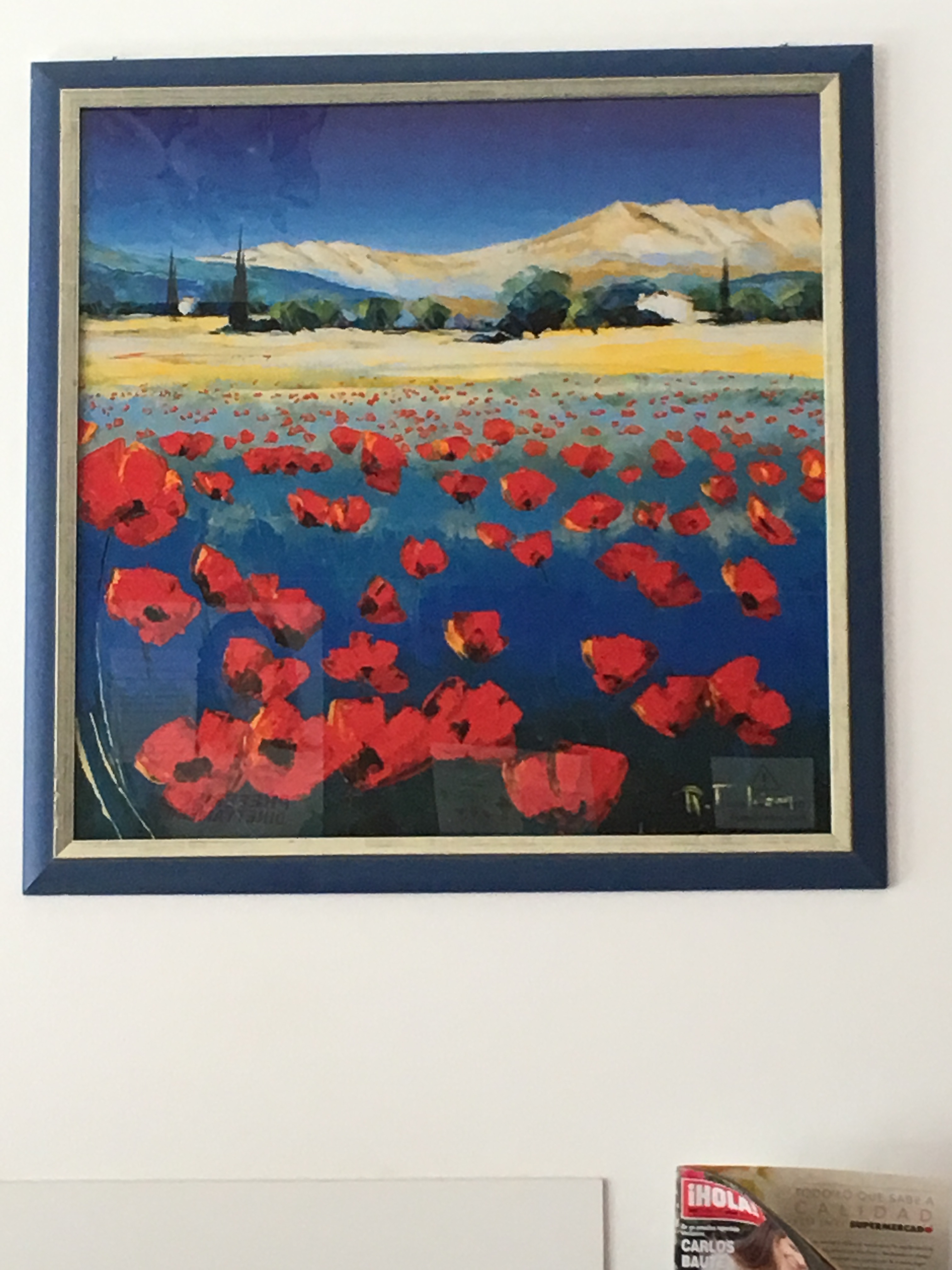
            The blue-framed picture stood out from the white wall.  It framed a poppy field scene; a blaze of red with a copse of trees in the distance and, further still, white-tipped mountains, hard and stark against the blue summer sky.

The buzzer sounded.  The person next to me go up and shuffled through the waiting room.  A door opened and a white-coated doctor stood, clipboard in hand, and ushered the man through the door.

“Good morning Mr…”

The door closed.  I was next.  I looked at the picture again, studying the contrasts of the blood red poppies against the yellow cornfield against the white mountains against the painful blue sky.  I liked the green, it was reassuring, a place of rest for the eyes in this riot of colour.  I looked at the trees, full in their summer coat of green.  Something moved.  It wasn’t out of the corner of my eye, I was staring directly at it, damn it.

Yes, it definitely moved.  What the hell?  Behind one of the trees a figure, a man appeared.  He poked his head and shoulders out from behind the trunk.  I looked away, it would be ok, just look away, look at the window, think about that bus that’s crawling past in the slush outside.  I looked back.  Still there, he was still there.  He waved, the little bastard waved to me.

A door opened down the corridor and I heard a shambling gait amble towards the reception area.  I was next.

I looked up at the picture.  The little man was joined by a friend.  They both waved as they came out from behind the tree.  The buzzer sounded and the door opened.  A man in a white coat and clipboard appeared.

“Good morning Mr…”

I looked at the picture one more time.

Thank God I was next.

I hope my doctor doesn't mind me using this image...

I hope my doctor doesn’t mind me using this image…


Swimming and jumping

“You first.”

“Nnh, nnh.  No way.  You wanted to come here.”

“Yeah, but you’re older than me.”

“Two months.  Big deal.”

The boys stared across the lake.  It shone black in the high summer sun.  Black and deep.  Overhanging trees edged the lake and reflected in the shallows.  Further out a fish jumped, its body smacked the water, creating a noticeable ripple.

“Pike,” said one of the boys.

“Tench,” came the reply.

“Tench don’t jump.  It was a pike hunting something on the surface.”

A pike hunting on the surface.  This possibility changed the game although neither admitted it.  There were some big fish in the lake.  How big?  And pike could be nasty.  Rows of backward-facing teeth.  They’d heard stories from the fishermen who sat on the banks, passing away their time away from wives and children.

As they stood, their feet growing colder and whiter in the pebbly shallows as their indecision increased, the distant surface of the lake rippled and wavelets raced towards them as a fresh wind blew across the lake.  One of the boys crossed his arms and rubbed them.

“You’ve got goosebumps,” said the other, “you’re scared.”

“I’m not, I’m cold.  We could’ve been halfway across the lake by now if you hadn’t have been so scared of a few fish.”

“You mentioned the pike.”

“It was a pike, tench don’t jump.”

“Says who?”

“My uncle.  He’s a fisherman, he told me.”

“Go on then, you first.”

“No, you go.  You’re the one that was scared.  I dare you.”

“Let’s go together.”

They placed a hand on each other’s arm and shuffled over the hard slippery pebbles.  Clear water rose up their legs.  When it got to their knees they both stopped.

“It’s cold.”

“Yeah.”

A passing cloud blotted out the sun and the air grew chill.  The surface became leaden.  Another gust of wind tore across the lake.  A few yards ahead of them the water erupted as a huge fish leapt.  Its splash seemed to echo as its body smacked down on the still-boiling water.

“Pike.”

“Yeah.”

“Did you see the size of it?”

“Yeah.”

“Fancy climbing some trees?”

“Yeah.”

Grey

Imagine someone just turning out a light.  One minute I was in the sunshine, strolling over the small bridge that crossed the river that tumbled between grey rocks green with moss.  The next, I’m crushed under a leaden sky and grey walls closed all around me, taking my air.

I find myself in front of what remains of a Cold War-era apartment block, the same colour as the sky with glassless windows, graffitied walls and waste of every kind strewn over the broken concrete.

A cold wind blows along the street and I pin the collar of my jacket with one hand and I look to bury my head in my jacket as litter dances little waltzes around me.  I stand back from the building, taking it in.  My stomach knots as the wind drops and the air stops breathing, tense.  A pale face appears at one of the holes that were once windows.

I start to shake.  The sky mirrors my soul as I wonder, not for the first time, why I came here.  I know why.  Pain.  Pain is why I’m here here.  White shards of pain that strip and shred the nerves as vultures tear at a long-dead carcass.

The first couple of months had been fine, taken care of by concerned doctors whose hands caressed the prescription that I eyed as a spectator watches for the matador to give the bull that final thrust.  Even the sight of that little A6-size slip of paper was enough to alleviate the pain I (imagined?) felt.

Then, when I started to walk without wincing, the morphine prescriptions dried up and stopped.  They stopped but my body’s craving didn’t. And so here I stand, shivering, waiting for a little packet of warmth.


Swiss six word stories

He looked at her, and Gotthard.


For those of you with dirty minds, I was writing about a man and his wife on holiday, just before passing over the St. Gotthard Pass.  🙂


Post Navigation