My Words, My World

First drafts – A few pages in the large wilderness of the world of writing

Archive for the category “Fiction”

Sometimes, always – part II

“I’m already in town Stephie.  I’ve an hour before I have to meet Dan and Bill.”

“OK Jules, see you at Starbucks in 10 minutes.”

Julie gathered the various carrier bags and took a slow walk along the pedestrianized high street.  She stopped to look at the new releases in the window of W. H. Smith then made her way to Starbucks.  Her friend was already seated, looking at the coffee menu.  She looked up as Julie came in then looked at the bags.

“Hello Jules.  It’s not Christmas come early is it?”

Julie placed the bags around her chair, smiling.

“Bill’s birthday next week.”

“Where is he, with Dan?”

“Yeah.  They’re taking a walk along the beach.  Bill loves the sea.”  She shivered.  It didn’t go unnoticed.

“Have you tried talking to anyone Jules, apart from Dan I mean?”

She shook her head.

“I think it’s time you thought about it.  You can’t go through life with this fear that stops you doing something you always liked before.  Cappuccino?”

“Stephie got up and ordered two coffees, leaving Julie staring at the black plastic table.  A minute or so later she returned, coffees in hand.

“Four years have passed; you’ve got to move on Jules.”

“I will. I will.  I’m just not ready for that last step, to air it out in public.  Not at the moment.”

“What does Dan say about it.”

“That he understands.  He can’t though.  How could he?”

“Well, no one apart from you can really understand, it’s impossible.”

“At least, as a woman, you can understand me more.”

Stephie stirred in the sugar slowly, contemplating this last comment.  She looked up into her friend’s eyes, which were starting to glisten.

“You can see a psychologist Jules.  Professional secrecy and all that.”

“The psychologist will still know though.”

“Yeah, but you won’t have to go back there.  I’m sure it’ll do you good, you can start to enjoy walking with Billy again.”

“All Billy’s ever known is that I’m scared of the water, that I can’t bear the sight of it.  How will explain the sudden change, if indeed I do change?”

“That you did it for him.”

“And how am I going to tell a psychologist?”

Stephie looked into her friend’s face.  Her eyes were still glistening.  They were more than glistening.  Her eyes wrinkled around the edges.  She pinched her mouth shut to control herself, but she couldn’t hold it back and sprayed coffee over her jeans.  Customers looked round as Stephie howled with laughter.

“It’s like this, Doctor.  I was sunbathing on a beach when a bloody big crab came along and nipped my tit.”

Sometimes, always

The pebble skipped across the water, hit an incoming wave, flipped and sunk into the grey shallows.

“Five bounces Dad.”

“Best one yet Billy.  We call them skips, when the stone bounces like that.”

The boy picked up a stone of his own and launched it.  It went more sideways than forwards and landed with a plop.

“You’ll get there Bill.”

“I’m too small Dad.  I will when I get bigger though, won’t I?”

“You will son, you will.”  He ruffled his son’s tangle of blond hair that shone even in this miserable, murky light.  It looked like rain.  They turned and walked along the water’s edge, enjoying the sound of the waves breaking on the pebbles and the rattle and sigh as the water withdrew, rolling the pebbles with it.

“I’d like to live here Dad.  Would you?”

“I’d like to Bill.  Your mum wouldn’t though, she can’t stand the water.”

“If we lived here she wouldn’t have to come with us to look at the sea though Dad, she could go shopping.”

The man smiled.  He envied the innocence of the child’s mind and the questions it generated.

“It’d still be too close for her bill.  Your mum doesn’t just dislike the water; she can’t bear the sight of it.”

“Why’s that Dad?”

They continued walking along the shore, their feet sinking between the pebbles that rattled under their feet.

“Let’s make a move now son.  We said we’d meet Mum at 2 o’ clock.  She’s probably loaded down with bags and needs our help.  Feeling strong Bill?”

The boy picked up a last pebble, crouched down and threw it, his arm straight, in a sweeping motion.  This time it didn’t go sideways.

“Well done Billy boy.”

The boy ignored the compliment.

“Why’s that Dad?  Is it because she likes shopping?”

“You and me like walking by the sea.  Your mum feels good walking in the town centre.”

“Shopping, Dad?”

The boy wasn’t looking as a grin stretched across his father’s face.

“Sometimes Bill, sometimes.”

“Sometimes always Dad.”

Broadsheet

I looked up from my phone.  My girlfriend had texted me.  She’d changed her mind and decided to go for a drink with the girls from the office so could I get something for myself?  Yep, I thought, I’ll also pass the off licence for a bottle of Australian red.

I started people watching, something I never do.  I’d never taken much notice of how much people now walk around in their own world, without passing a word between them.  People passed each other like unlit ships on a foggy night, unaware of each other and in danger of colliding.  Heads tilted, eyes down and in total ignorance of their surroundings.  I guess once upon a time people used to wander along with paperbacks or something.  I can’t remember.

A man stepped out into the middle of the pavement, a newspaper (a newspaper?) under one arm, an umbrella under the other.  With his Bowler Hat, he gave me the impression of a Magritte painting.  He looked around at the tide of people ebbing and flowing around him, smiling and amazed as they avoided walking into him.

“Excuse me?”, he said.

Screen-lit faces continued to shine briefly then they were gone.

“Excuse me?”

Palm-held virtual reality maintained its silence.

The man looked around once more, coughed politely and took the newspaper from under his arm.

“Very well.”

He unfolded it and shook out the creases.  Looking around once again he opened it, arms wide, and stood in the middle of the pavement.

Two lines of people opened up, one going east, the other west.  I watched him stand like a beacon in the middle of it all.  A low hum of voices murmured.  He watched their faces, gently lit in the phone-glow, as they approached him, an unwanted distraction as they tried to avoid him.

“Can’t you move?”

“Mind out!”

“Do you have to just stand there?”

A gust of wind rustled the paper in the man’s hands. He ignored it and continued to stand there, arms wide, as an army of new-age hunchbacks flowed around him.  I laughed.  The other people at the bus-stop looked at me, now distracted from their own telephones.  Smiling, I left my place in the queue, forgetting all about the number 38 that would take me home.

I took an Evening Standard from the rack and walked up to the man.  Standing in front of him I opened the newspaper.  I heard his paper shuffle as people continued to tut and moan their way around us.  A face peered round his newspaper.  He raised one eyebrow, disappeared behind his paper and cleared his throat.

“Shares due to plummet.”

Smiling, I scanned the pages.

“Sex scandal secretary wants top job”, I replied.

“Do you have to bloody well stand there?”, asked someone as they almost collided with us, his sappy smartphone face a picture of indignation.  He went back to his phone and moved on.  The man behind the paper coughed.

“Environment minister to quit over unethical shareholdings”

I took up the game.

“Woman jailed for manhood attack.”

“Price of oil to continue dropping.”

“Actress in no-underwear shocker.”

It continued to and fro as we worked our way through the papers, ignoring the protests of passers-by.  Finally, we’d finished.

He doffed his hat to me as he folded the newspaper and stuck it under his arm.

“Same time next week,” he said, “but next time, bring a broadsheet.”

No going back

‘So, who do you write like?’

‘Bukowski.’

‘Bukowski? You write like Bukowski? Ha!’

‘No, I drink like Bukowski.’

‘That’s why I’m here. So who do you write like?’

The doctor unzipped his black bag and raked around inside.

‘Why do I have to write like anyone? Why can’t I write like me?’

‘Everyone has influences. I aspire to attain the heights of some notable surgeons, in time.’

‘Hemingway.’

‘Hemingway? You write like Hemingway? Don’t kid yourself.’

‘No, I drink and fight like Hemingway.’

I coughed as the stethoscope was placed at various points around my back. I looked at the cigarettes on the table.

‘What about your poetry?’

‘Rimbaud.’

‘Rimbaud? You …’

‘No, I drink like Rimbaud but I’m not French or gay.’

‘You’re going to die like Rimbaud.’

‘There is a heaven after all.’

‘No, seriously. The alcohol is killing you. You’ll have to stop.’

‘No going back.’

‘I can’t make you but as your doctor I’m telling you, you’re going to die, and soon if you don’t stop.’

‘How long?’

‘If you don’t stop? Weeks, months. I can’t tell unless we open you up.’

‘I’ll stop.’

‘You’ll stop? Really? Just like that?’

‘Do I have a choice?’

‘No, not unless you want to die. However, you still haven’t been published so it wouldn’t even be a very good career move.’

‘Well, I sold a story and one article.’

‘That’s good but you’ll have to do more and to do more you’ll have to stop killing yourself.’

‘Doc, take that bottle of grappa. It’s a good grappa and I don’t want it.’

‘Sure, I’ll take it. Thanks.’

‘Doc, there’s some good wine in the kitchen, take it, give it to your wife or your secretary.’

‘OK, thanks. Remember, there’s no going back. Falling off the wagon is not an option, you’ll die.’

‘No going back. Sure doc.’

He got his things together, wrote out an illegible prescription and told me to get my ass down the pharmacy. I passed him a bag with the bottles as we stepped out and I shaded my eyes from the low winter sun. He clanked his way to his car. I pulled a couple of envelopes from the mailbox.

‘No going back,’ he reminded me as his car coughed blue exhaust smoke into the cold air.

Back in the kitchen I tore open the post. My head swam from the hangover.  For once it wasn’t a bill. It was the agency, they’d found a publisher, a real publisher who wanted to publish me. Me.

I opened the cupboard under the sink, reached behind the bin and pulled out a bottle.

‘No going back,’ I said, to no-one in particular as I toasted myself.

Leaving

The hand moved across the table, casting a shadow under the glare of the uncovered light bulb, now dull with dust. There was still strength in the hand, and a life of hard work and physical activity showed in the knots of vein and muscle as it moved.

A muscular forefinger which had shot and killed men in war, under orders and without hesitation, now lifted, paused then started to tap, without rhythm, on the plastic table. The window rattled as the wind picked up snow and threw it against the glass, a draught blowing past the single pane. The finger stopped while a deep, chesty cough ripped the silence and echoed in the room devoid of furniture except the table and two chairs.  A car horn beeped twice outside

“It’s time,” said the voice, finding breath once again.

“Yes love, it’s time to go.”

“They’ll look after us Eve.”

The hand reached out across the table and grasped one no less young but smaller and softer and cold to the touch. A sob broke the brief silence.

“54 years in this house George. We raised children who’ve raised their children and all the while we’ve stayed here. It breaks my heart to leave it yet…”

Another gust of frigid air escaped from the rattling window pane.

“At least we’ll be warm my love, and we’ll have company our own age.”

The smaller hand gave another squeeze.

“You’re right George, I guess we have to go.”

The hand, cold and white at the fingertips, helped Eve to her feet and into her coat. It reached for the light switch, and hesitated, as it touched away a solitary tear from a wrinkled cheek. Wind tore past the loose window pane.

“At least we’ll be warm, Eve.”

Ink

I’m currently trying to work my way through the minefield of novel writing.  Now my teaching course is finished I try to dedicate at least an hour every day before life enters my world.  This doesn’t mean however that I’ve lost my love for the short story, in fact I’m using word limits of late as a writing exercise, to get the brain moving if you like.  Here’s another one of them, this time I gave myself 200 words.  It’s inspired by the black paint peeling off the gate – I just changed place and perspective.  Over to you.

__________________________


A hesitant scribble with the last stub of a pencil, trying to make it last.  Where would the next one come from?  He’d tried scraping the walls, adding saliva, hoping to make primitive ink but it dried and faded, a metaphor for life, he thought.  Like a rose, it bursts into bloom then slowly the ground is covered with a silken duvet.

The pencil was his saviour, his sanity.  He wrote to no-one but the words he scrawled were his words, his truth.  He held the stub of the pencil and wondered how many more words he could write before the lead finally gave way and became nothing.

As he lay on his bunk, listening to the night sounds, he heard a faint patter.  His thumbnail struck the match, expecting a cockroach or maybe a mouse for company.  He saw nothing except shavings from the ancient black bars, which he now held the match to.  The paint was peeling.  Before his fingers burnt he scratched the black paint and spat on it.  Salvation. The writer, with another six years to serve, lay smiling on his bunk.  Tonight he could sleep without worrying about his pencil.  He had found his ink.

99-word fiction – The face

She lay on the bed and he kissed her again.  She was beautiful.  Her face, that face, as smooth as morning ice, her complexion airbrush perfect and those eyes, deep and black as mineshafts, stalked him around the room. He was reduced to switching off the light before undressing and only when he was under the duvet would he turn the light back on, and there she was, a remote smile always on her face. He couldn’t go on like this, she had to go, permanently.

He bent down and kissed the cover of Vanity Fair one last time.

A train, and Ernest

The train leaves Milan Central station and heaves over the tracks in the rain which streaks the dirty windows; its carriages are packed with steaming rush-hour tiredness and anger.

The young man sits in the corner up against the window, as the rain beats time, with Hemingway’s words falling off the pages as he tries to concentrate but can’t.  For Whom the Bell Tolls?  The bell was tolling for people who want peace and quiet on a train carriage to allow them to read, he thinks.

A fat man who’d possibly eaten only garlic for lunch sits opposite, hand wrapped around his phone in some strange death-grip as he seethes and steams, letting the person on the other end know as well as the other three occupied seats around him that, Cazzo! the fucking contract has to be there by Friday or it’s not just his balls on the line, understand?.  He doesn’t say which line, which is OK; the less he talks the better, the young man thinks, his own anger rising.

Through the red mist that descends before his eyes the young man looks up and sees her, in the opposite seat across the aisle.  Her silky, shoulder-length hair is dark, and her hazel eyes strike out from her face which seems to have had the benefit of a tan recently.  In her jeans and blue sweater with white stripes (a little French he thinks: oui mademoiselle, oui), she becomes his calm in a storm-tossed sea.  He watches from a distance, as her forehead wrinkles and she glares at the woman opposite her.

This woman opposite has her tablet on her lap and has wires and a mike stuck to her head as she babbles continuously, her voice rising, informing everyone that didn’t want to know that Cazzo! how the hell is she supposed to fit in another meeting on Thursday, she isn’t a fucking machine you know.  Sat there looking like Robo-Queen that could be debated, the girl thinks, as she lowers her head and raises her book in an attempt to block out the irritation. As she does so the young man opposite gasps.  A Farewell to Arms – Hemingway; she’s reading Hemingway!

Mr Garlic is making another call but its wafting anger slips into the background as the young man looks only at the young woman across the aisle, his book held up to his chest, now half-forgotten.  The train starts to slow.

Robo-Queen finishes her call and transforms into e-bitch as she proceeds to beat the hell out of her tablet, with two fingers having some maniacal life of their own as she sends an email, probably shouting Cazzo, cazzo, cazzo!

The fat garlic man wheezes his bulk into an overcoat big enough to protect a small car from winter frost and grabs his briefcase, stuffed full, as its leather creaks for mercy, and he makes his way to the door.

The young woman looks up.  She sees the young man looking at her and her eyes drop to his chest.  She sees.  Fine lines around her eyes appear and she gives him a smile.  He returns it just as e-bitch starts to make another phone call.  He waves her over to the now-vacated seat opposite him and they whisper words of Ernest, in earnest, as the train takes them home.

Like the passing of wind…or was it air?

The heavy, oak door slid on hinges oiled better than a Neapolitan donut-seller’s hair and Gaum heard it. Well, he sensed the liquorice black room slip into a shade of night slightly less gloomy, but still far darker than charcoal, jet or even coal. He stopped breathing. Well, he’d actually done so 14 years previously and just never got back into the habit. What a waste of energy, he thought, and carried on living his life in apnoea, oblivious to the need for ins and outs of oxygen and carbon dioxide. Ah yes, the door.

He had to hide and moved with so light a presence that the dust under his feet, which had last been swept around the time Gaum still breathed, failed to raise a speck. He heard giggles as light flooded into the room for the first time since the floor had last been cleaned. Bollocks! he thought, Kids! What are they doing in here? It had been some time since Guam last laid eyes on children, in fact probably around the last time a dim light rolled in from behind the heavy oak door which swung on an oiled hinge, but they’d never been in this room, ever.

The giggling got louder and the light lighter. Gaum kept still behind the ancient teak desk, as the giggles became murmurs. Dust kicked up, swirling and dancing in the shaft of light from the open door and a heavy scraping sound made Gaum’s heart leap. The chair, its cracked and faded burgundy leather billowed more dust.

“I thought of it first.”

“Get off; I got us in here didn’t I?”

“Yeah but I thought of it.”

“Only because I told you about it.”

The tussling continued, dust was thrown up everywhere. Gaum wanted to sneeze but then remembered he’d stopped breathing, so sneezing seemed irrelevant. A loud, metallic ringing followed by a series of taps told Gaum they had knocked a pen off the desk. Still they pushed and grunted and still the dust flew.
A heavy groaning sound was followed by a grinding crash. He looked out from behind the desk. Busted, bent keys lie about like dead soldiers, the ribbon strewn across the floor in a last bid for freedom and the carriage return lever lay twisted under the bulk of the old Remington like a broken leg.

“Look what you did.”

“It wasn’t me, you pushed it.”

“Let’s get out of here before someone comes.” Two shadows leapt through the open door.

As their footfalls faded, a light shone down on the remains of the typewriter. Gaum felt strange and light, so light in fact he could feel himself floating as he looked down on the senseless mess.

Then, with a shake of his head and something resembling a sigh, or maybe the passing of wind, or a breath of air, the ghost of the muse of the long-dead writer was finally free.

Keep her well hid

They were sitting in the corner, I guess looking for a little privacy but they came to the wrong place if they wanted that. The tables were too close together for one thing, and besides, everyone had to pass by that table to go to the toilet.

She was angry, upset, pissed off. Choose any adjective you want; she looked ready to stick her cocktail stick and untouched olive where the sun don’t shine, his sun at least.

I arrived after being dragged around the shops for two hours and I’d run out of patience and my credit card out of, well…credit. I put Lucy in a cab, with bags, they were all hers anyway, and made my way down to the King’s Head. Football was on the TV and I wanted, no, I needed a pint or two and anyway, I was busting for a lash. I nodded to the barman, asked for a pint of ale and made my way to the Gents. That’s when I noticed them.

He had his hands out in front of him when I passed, and, relieved at being relieved, I made my way back with less haste and he still had his hands in front of him, like he was praying or testing for rain or something. Whatever he was doing was having no positive effect whatsoever; maybe he’d run out of credit too. I got my pint and made my way to a little table, a little way off to the right of them, with one of those retro Heineken mirrors on the wall next to me and I could see them in action, as well as hear them.

“You were a twat Paul.”

“I know love, I don’t know what happened, it just happened.”

He’d chatted up, touched up or ballsed up by the sounds of things. Typical bloke, I know how you feel mate, I thought. I went back to the football, trying to concentrate on the game which was slower settling than a pint of Guinness. The ball was pinging about all over the place, no fun to watch but I watched it anyway, it certainly beat the hell out of shopping. A free kick got my attention but not for long.

“Where is she? Where did you put her?” Her? This made my ears pick up a bit. I pretended to watch the football.

“Behind the allotments near the railway embankment. There’s some old garages there and I left her there.”

“You f…”.

“Do you want some more drinks?” It was the barmaid, taking their empties from their table. He said yes, she said nothing so I guess she either nodded or shook her head, there are only so many things you can communicate without words. The barmaid plonked the glasses on the bar and poured a lager.

“It won’t be for long, it was like a temporary measure, you know. I didn’t have the time.”

“You could have done better than that. She’ll be found in no time Paul. What the bloody hell were you thinking?”

“Shh…, she’s coming back.”

The mirror told me she’d folded her arms, a frown that looked furrowed with a hand-plough creasing her forehead. She looked at her phone, he looked at her. The barmaid put two glasses down, it was a nod then.

“I’ll go now, after this drink, alright?”

“Yeah? Well, I suppose it will be dark in half an hour, won’t it?”

“Yeah, it’ll be alright, you’ll see.”

Who was she? What had she done? What had he done to her? I had a hundred questions and didn’t know what to do with the information I’d heard.

“I hope you’re right Paul, she’s been in the family for years.”

“She’ll be alright Trish, really. Who’d want an old car like that anyway?”

************

I entered a competition recently where I had half an hour to write on one of three subjects given.  I chose “a conversation” and out came the above.  While I was writing I didn’t know who “she” was but as the minutes ticked away I decided I wanted to write something that didn’t involve death or murder, and as we English-speakers have a penchant for talking about our cars as feminine, the little ending came to me.  I submitted with one minute left and received a ‘commended’ so it was ok. 

Hemingway once said “write drunk, edit sober” – when you only have half an hour to do both, which do you chose? 

God speed this bullet

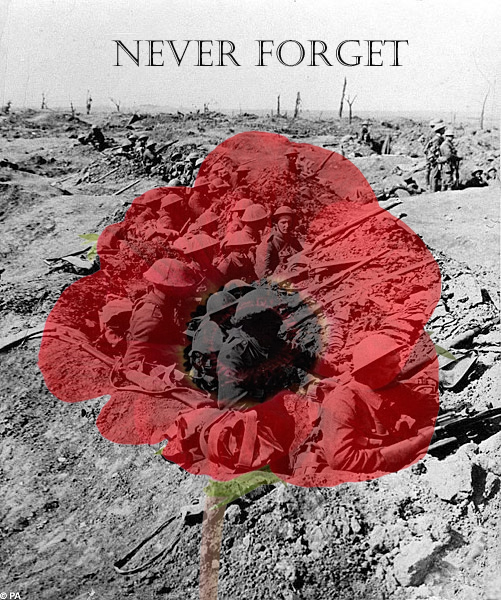
96 years ago the First World War, the Great War, was finally over.  A generation of young men, those that returned home, were left to pick up the pieces of what they had experienced, seen and endured.  They said it could never happen again. but it did; 21 years later.  As terrible as the Second World War, the same as any war, was, there is something truly horrific about the trenches.

***

The ground heaves and shakes and small rivers of dirt fall, splattering my helmet and the pounding of the earth is like a fist in my back. I look at Jenkins; he’s now bleeding from the ears and nose from the concussion of this incessant artillery barrage. I look at the lieutenant; his face flares white in the explosion flashes; dark rings his eyes and he’s gaunt, like the rest of us. He’s one of us now. After two years in this hell-hole the only part of Cambridge that remains is his manners. He looks at me.

‘Don’t,” he says.

He knows I want to look, I can’t help it; George was my friend from the pre-war days. George who had the nerve to stick his head above the trench, only for a piece of shrapnel to tear it off and fling the rest of him across the trench. The trench, this devil-made wormhole. What will I tell his wife when I get back…if I get back?

A let up in the barrage and the shadow of the black Somme night passes across the trenches, leaving destruction, torn and twisted bodies, fatherless children and husbandless wives but now all was silent. We’ve been stuck here for months, barely advancing, barely retreating. The smell of the ripped earth and dank mud in which we wallow is everywhere, except when the wind blows towards us and the stench of death and decay replaces it.

‘Help…’

The voice is faint but it’s there. In the sudden and welcome silence it’s as clear as birdsong on a June morning, agony and suffering coming through in just one word.

‘Who the bloody hell is that?’  Symes; newly arrived from the train, all shiny boots, clean puttees and enthusiasm. They always arrive with enthusiasm. What the hell are they telling them back home? Five days a week killing the Hun then Saturdays and Sundays off, French whores and bistros thrown in?  ‘Can we not do something for that poor bugger sir?’ he says, turning to the lieutenant, who sighs.

‘Corporal, take a look and be bloody careful.’

I take off my helmet and place it on the butt of my rifle and slowly raise it above the trench, joggling the rifle to simulate movement: nothing. No sniper fire to split the night. The lieutenant hands me his field-glasses as I replace my helmet and climb the ladder. They say there’s nothing blacker than no-man’s land at night but that’s not strictly true, especially following a barrage. The artillery will always find something to burn, even if it’s just human remains, and little fires dotted around cast an unholy light in the field-glasses. I first scan the enemy lines, looking for movement, but I see none.

‘Help…’

My vision jumps from crater to crater, searching for life and hoping for it also, in this God-forsaken pit of human misery. At first I see nothing, then I take a slower, longer sweep with the glasses. I see movement; slow, shambling movement some twenty yards away where the barbed-wire is stretched across and upon which hang torn and crow-picked corpses, like some infernal spider’s web. A slow, crawling movement catches my eye and even in the dead-light I can see enough. It’s a soldier, a German soldier, gone from the waist down, pulling and dragging himself inch by agonised inch towards our trench.

‘Well I’ll be damned. It’s a Jerry sir and in an awful state by the looks of it.’

‘What the Dickens…’ as he climbs up, taking the field-glasses from me and looks upon the awful site before us. He wipes his mouth with the heel of his hand, sighed and turns, stepping down into the trench. Not a moment too soon, as a high whistling noise is followed by chaos. The concussion from the blast is enormous, filling my head with a death-roar and I could feel my ears and nose bleeding freely. Symes is on the floor of the trench, his legs pinned down by dislodged sandbags but he’s ok. Upon hearing that whistle, the lieutenant, Jenkins and I all threw ourselves against the wall of the trench. Symes will learn, if he has time.

‘Corporal, who’s our best shot?’ but he looks at Jenkins, the Welshman is a crack shot and needs no introduction.

‘Help…’

‘Take him out Private. I won’t risk stretch-bearers to bring him in but the sorry blighter has suffered more than enough.’ He moves aside from the ladder to let the Private through.  The figure is nearer now but still a good fifteen yards away. No trouble for Jenkins, who could shoot a canary in a Welsh coalmine from fifty. The first signs of dawn are beginning to pink the early clouds, which a rising breeze is scattering. Jenkins brings the rifle up to his right shoulder, intent only on what he sees at the end of the barrel.

“God speed this bullet and put that poor devil out of his misery”, the lieutenant says, to no one in particular.

“Amen,” says Jenkins, and his finger tightens on the trigger.

As if in response the morning sun throws its first rays of light through the breaking clouds and onto the battlefield. The bombardment has done a lot but not enough; the barbed wire is still in place. If we have to go over the top we’ll be torn to pieces by the German machine-gunners.

The report of Jenkins’ Lee Enfield barks out. The lieutenant raises the field-glasses but they aren’t needed. As more lights floods across the battlefield the sliding, shuffling figure shimmers and fades to nothing.

We look at each other in silence. We’ve all heard stories of ghosts on the battlefield and I guess with so many men butchered on a daily basis it was only a matter of time. I wonder, should God grant any lasting peace on this Earth, in 100 years how many of our souls will still wander here, lost in a foreign land far from home.remembrance_day___poppy_day_by_daliscar

***

I’d like to acknowledge http://femaleimagination.wordpress.com/2014/11/11/11-november-world-war-i-ends/ for the use of the photograph.

Flash Fiction Friday 146: Colours frozen in time by Chris Farley

My ever present and never diminishing thanks once again to Morgen.
I’m still unsure as to whether I should be disturbed about the fact that I sat in a pub looking at a tattoo and invented this story around it…

morgenbailey's avatarMorgen 'with an E' Bailey

Welcome to Flash Fiction Friday and the one hundred and forty-sixth piece in this series. This week’s is a 436-worder by Christopher Farley.

Colours frozen in time

The tattoo was the first thing I noticed; it was beautiful. She sat opposite her friend drinking Belgian beer from a huge glass and I saw it as I walked past, making my way to the men’s room.

Her thin, white arms poked out from her even whiter t-shirt, then a waterfall of colour burst from the sleeves of the t-shirt. Three lotus flowers, red, green and pink, one on top of the other. But oh, the arm. How could something so pale and delicate suffer so much pain? I returned to the bar and pretended to look at the game on the big screen. Her friend rose from the table and headed for the toilet.

“Hi.”

“Hi.”

“Sorry, I couldn’t help…

View original post 661 more words

The shrink and syllable

Message / psycho / disyllable

Sounds like an English pub name, in fact, should I ever own a pub (dangerous Farley, dangerous) it wouldn’t be a bad one.  I digress.  This piece came from an early morning idea of opening the dictionary, closing my eyes and jabbing my finger three times and seeing what words were found…the first two were ok. At 7am I really had to think about ‘disyllable’ though. Anyway, I gave myself 20 minutes for the exercise and it rolled out like this:

***

He sat there staring at me, just wouldn’t drop his eyes. I could feel myself squirming inside, uncomfortable was not word enough for how I felt. In some far off corner of my brain though I rationalised; he had a point, some twisted logic that made his argument plausible. He waited.

“You must understand Mr Brunton that I am not an expert in that field.”

Yes, but what do you actually think doctor?”

Well, I suppose if I had an opinion I could proffer it, I guess I can’t see the harm.”

He waited. I cleared my throat. I wasn’t so much worried about his reaction, I found myself wanting his approval. I held his gaze.

“The first thing is you need to stop thinking everything is some kind of subliminal message, with some hidden agenda. It really isn’t like that. You…”

“Doctor, you work for the system, you would say that.”

“System? What system? I am a psychologist Mr Brunton, you came to me remember?” I heard my tone change. No matter what the situation I’ve always kept a lid on my feelings. Impartiality is my middle name. However, with this psycho sitting in front of me thinking God knows what about me, whilst the colour drained and returned to his face with every fleeting emotion that raced through his mind, his eyes constantly wandering round the room. I could feel tiny bubbles of anger rising up, like champagne in a flute glass.

“There is nothing untoward about it,” I continued, “and I really don’t see the problem Mr Br…”

“Ah! But you wouldn’t would you doctor. For you it isn’t a problem you’ve ever considered. How many people go through life blatantly ignoring fundamental questions such as these? Too many I shouldn’t wonder.”

“Mr Brunton.”

“You ignore these things at your peril doctor. These issues must be confronted, they have to be…”

MR BRUNTON!” I was now shaking visibly and any trace of impartiality had flown out of the window or crawled under the door. “Mr Brunton, I am not an expert in either linguistics or grammar, therefore I will now find you the contact details of the Oxford English Dictionary, whereupon you can contact them yourself and ask them just why the word “disyllable”, which means a word containing two syllables, itself actually contains four.”

I see you in the darkness

The sunlight for a second
Blinked
A shadow
Its shadow
By my window whispered
Or did it laugh
As I felt its draught
And shivered
My skin crawled,
then froze
The shadow passed
for now
But it’ll come back
When night falls chill
For I will give it life
In black and white

I’ll just close my eyes a while

Ah, at last.  I’ve finally written something fictional, it seems ages since the last one.  Thanks to Morgen Bailey and her Story Writing Exercises I found myself writing this at half past midnight, using the keywords:  need, leave, Nebraska, pick, song.  I went slightly over the 15 minute limit – 17 to be exact.  Then I left it, went to bed and came back to touch it up this morning.  So, thanks for that Morgen.  Great exercise!  So, let’s see how this little 550-worder stands up in the warm light of a summer morning shall we?

  ***

My back is sore, my legs cramped and my coat can’t be pulled any more tightly around me. My breath fogs and my fingers and toes seem to have left me for warmer climes, but my ribs, hard against the hard cold wood, jolting and jerking, are the worst.

I’d taken a beating before leaving Summer Creek. Panning for gold in them hills can make you feel like a king, but it can make others feel like killing you, make them envious. I’d gotten away as best I could I suppose, considering the kicking I got. Still, I kept my gold, or most of it. They only found a few nuggets and the rest was well-hidden. It was the gold I’d promised not to touch: Janie’s gold. The gold I wanted to win Janie back with, the gold I need to win Janie back. As I move I can hear her letter rustle in my coat pocket, a crinkled reminder of a love gone bad, and a love now gone.

The hell was she doing in Nebraska anyhow? What, or rather who made her leave? I knew the answer to that; she couldn’t live alone for long, she needed company and preferable the male-type. The Lincoln postmark was the first thing I saw when I received the letter, two months ago now. It made my heart sink, then I panned just that little bit harder, worked just that little bit longer to bring her some gold from the Black Hills, to get her to come back to St. Louis. I’m a fool, I know but this is no fool’s gold in my possession. She’ll see that, when we meet. I still can’t believe she’s gone even now. I can think of nothing else as I sit, freezing my ass in this slow, empty cattle wagon, shunting and bumping through the South Dakota night.

I lay my head back, close my eyes and listen to the movement over the tracks, each cross-tie and rail joint out to get me. I’m sure I can taste blood now; punctured lung? Could be, 6 pairs of boots can do damage to a man already weakened with a broken heart. I begin to hum an old song; The ship that never returned, one of our camp side favourites. Billy would take that banjo from the sackcloth and pick like an Appalachian angel. Billy. Billy bust flat this autumn, running up debts and making enemies. They took his banjo, then they took Billy. Mountain justice. No one said anything, we all had debts but most of us were panning enough for our need; except Billy.

All this gold weighing down my pocket and I’ve not eaten in almost a week; feels like my stomach is touching my backbone: it probably is. At least I’ve Janie’s gold, hidden good. I would write her a letter or a note but my fingers couldn’t hold a pencil. I’ll just sit here all quiet. I wish there was at least a cow for company.

I feel so weak, so tired, it’s getting colder. I can taste the blood good now, getting stronger with every jolt of the train. I think I’ll just close my eyes a bit. I know I shouldn’t but just for a short while, I’m so tired. And so damned cold.

Story A Day May day 4 – I do it for you, baby

I’m a day behind – there’s nothing I can do although this was half-written yesterday. Life gets in the way sometimes and certain people and things cannot be refused. I aim to be back on track by tomorrow evening…promise!

************

‘You have pen and paper in front of you, and an hour to produce an award-winning competition piece. Today’s prompt is “The empty chamber”.
There comes a time when you lose control of your dream and it takes control of you. It doesn’t happen often, at least not to me. This time though it’s worse; this one’s really got me.

I, like you no doubt, let my passions intertwine with my dreams. The things that I want in life, the things that are tangible, doable, reachable – they become my dreams. I don’t dream lottery wins, a Rolls Royce or a mansion on a hill, I dream in words, in black and white, created by me for me, usually. This time it’s different.

Mr Farrow, Martin to his friends so he remains Mr Farrow to me, teaches afternoon writing classes at the local college. He’s good, I’ll give him that. He’s published; he wins things, people look up to him. Last year I started his creative writing class, in the hope of a little dream realization; I was working a couple of bars at the time, keeping myself busy at night and staying at home during the day; perfect.

Except my days now are empty, with only words to fill them. My live-in partner, Shareen, left me months ago, calling herself a victim of my obsession. I’m not jealous, I just like to know where she is, who she’s with, what she’s up to. In addition there was my writing. At first she thought I was a novelty, someone to show her friends – a writer. I write all the time but I’ve never won anything. After a time she saw that as a reflection on me and saw my lack of success as a trigger for my obsession with her. She’s wrong. I will win, I know this time I’ll win and win big too then that’ll get her back, that’ll teach her. She’ll want me then. My name and my fame, she’ll want that.

‘Just fifteen minutes left now, you should have closed your story and now be reading through, editing where necessary. Polishing till it shines – this is the big one.’

I sit there looking at Martin, at Mr. Farrow, and sight the barrel on him. I hope he’s written for his life, there only one empty chamber.

StoryADay May day 3 – Red sister

The prompt from 3 May contained required the use of ‘vermillion’ and ‘musky’.  I think I managed it.  It’s still 3 May in New Mexico, for example so technically I can still squeeze it in.  Well, it was written before my Swiss midnight.

**********


Her face looks beautiful in the bright, white light.  Her musky perfume fills the air as we sit on the terrace.  The shadows of her features pronounced in contrast, her nose creating a pyramid-shape and the furrows creating trenches in her forehead as she looked away from the glare; it’s a magical moment but one doomed to pass quickly, as all moments do.  In this early evening dim I am fascinated.

The day had dawned cold but bright, and, following breakfast of espresso and a croissant we decided to take a long walk along the coastal road, up and down the small hills with little traffic to disturb the tranquillity of it.  We must have walked more than 10 miles before deciding to stop for lunch at a small restaurant just off the road, perched on a small cliff overlooking the rock-strewn beach beneath us.  We ordered a Prosecco each from the bar and sat down at one of the small, plastic tables on the terrace, pulled our coats around us and lit a cigarette.

We had a fine lunch of spaghetti with clams followed by a shared lobster – what the hell, it was a special day after all.  The two bottles of white wine went down well, so well in fact I kept nodding off in the taxi taking us back to the hotel.  We stayed in bed for a couple of hours, making sweet love and holding each other close, barely speaking; there was no need.  Finally, as the daylight outside faded in its wintry haste, we took a shower, dressed and went down to the hotel terrace looking over the sea.  I tightened my scarf around my throat while she pulled down her hat and we sat.  Our drinks arrived.

The seagulls were screaming, swooping and diving every time a wave broke and the sound, along with that of the waves, filled the evening.

The western sky still glowed a variety of pinks and one by one the stars appeared but none outshone the beautiful Venus, her vermillion majesty abroad in the evening sky.  Sitting above the now-set sun she took centre stage.

“What’s that low star darling?”  She asked, pointing to it.  “It’s so bright.”

It was in fact enormously bright, even in the frigid winter air.  The hairs on the back of my neck made a lazy, crawling motion.  As we looked, she continued to burn brighter then, suddenly, her light expanded. It continued doing so until it seemed the sun had returned from below the horizon.  Still the light expanded.  The first knot of fear appeared in my stomach.

“What is it Honey?” She asked, holding my arm tighter.

“No idea, well actually I do but it’s not a rational one”

“Tell me!”  It was an order.  She fumbled in her bag for her cigarettes.

VENUS HAS EXPLODED! I wanted to shout.  I didn’t however.  My mind filled with possibilities and ramifications of our red sister disappearing into a million pieces.  My mind asked how, yet I knew the answer, it was obvious.

“Do you remember you read that article in the newspaper the other week about the approach of a couple of asteroids, big enough to do damage?”  I took one of her cigarettes and lit up.  Bloody low- tar were not need at this moment.  I broke the filter off and continued smoking.  I had her attention.

“Well the experts said they would pass within so many million miles of us.  I think that while we’ve been looking out of our porch to see if something was crossing our front lawn, no one told us what would happen if we left the back door open.  We’ve been worrying about a rogue asteroid or a misdirected comet for years but we’ve never considered other planets, I mean, why should we?  I think something has hit Venus and whatever it was was big.”

The light consumed the night sky.  The moon no longer cast a reflection over the calm, black sea.  The only reflection came from an ever-growing light around 100 million miles from us.

“Then we’re OK,” she said, sounding fairly convinced, “I mean what harm can it do us from here?”

She had a point; I mean what was going to happen?  A huge piece of rock had thrown itself into the second planet and by the looks of it had obliterated it, creating nuclear chain reactions and sending a million pieces flying through space.  What harm could it do?  I didn’t want to analyse that question, I didn’t need to.  I knew that somewhere across the gulf of space a piece of our sister planet was heading our way.

We ignored the cold and remained seated outside.  The bowls of olives and peanuts had been consumed; the ashtray had been emptied once and was steadily filling up again.  The light was getting ever brighter, the night sky lit completely, even the birds in the trees started singing, thinking it was daytime.  We continued to sit and watch, entranced.

Her face looks beautiful in the bright, white light.  In this early evening dim I am fascinated.  They told us the world would end December.  I’m now going to order us the most expensive champagne followed by the finest cognac.  I don’t think I’ll have time to pay for it.  I don’t think we’ll be here much longer.

StoryADay May 2014 (day 2) – My fridge, my end?

I know, I’m late but there was no way of doing this yesterday, work gets in the way sometimes. “Magnetic words” – that took some thought and alas…this is all I came up with. Roll on to Day 3

**************************

I can feel my heartbeat, my temples are thumping; a bit like the sound of a washing machine on slow spin at the end of its cycle. My stomach cramps, or rather alternates between cramps and butterflies that flutter by. I need to step away, I need to get a grip. What is going on?

I woke up, splashed my face and made my way to the kitchen, no changes from my usual Sunday morning habit of making myself a pot of tea and preparing a plate of digestive biscuits and placing both on the little coffee table, spreading out and opening a book. This morning however I awoke early; thunder trounced my head and lightning tried to sear its way through the blinds and the rain hammered on anything it touch. A perfect day for reading, I thought, pouring the first cup from the pot. Then, without taking either opening a book or switching on my laptop, I step over to the fridge.

I, now, you, why, see, kill

It’s been a week now. Last Sunday morning I awoke, made my tea and started to read when a whispering noise made me look up from my book. I didn’t see anything; at first. The words, they rearranged themselves, on their own. There’s no one else here except me. There hasn’t been since last Saturday, except now I think she’s come back. Or she sees why I did or else…I’m going to see why she will.

StoryADay May 2014 – Getting Home

Well, I didn’t expect to take part in this, I never have done. When I received my StoryADay May 2014 email this morning I paid it little attention as I had a busy, busy day ahead of me.  However a couple of inspired hours this evening have produced 1,500 words – whether they’re good words or not I’ll leave up to you.

I’ve no knowledge of Ohio but Google maps gave me a geographic idea. I’ve no way of knowing if there’s a bus station in Marion, Ohio. I know there’s a Route 23 – Google told me. Anyway, here it is.

Thanks Julie, thanks Neil.

**********************

It isn’t normal, there’s no way this is normal. Bob Dylan once said you don’t need a weather man to know which way the wind blows and normally I’d say Old Bobby was right. I do however wonder what he would’ve said if he was stuck here with me in this dog-turd bus station, where the lounge caters for both arrivals and departures, somewhere in these back-fields of Ohio, watching a little Vespa getting blown around like a dropped chewing gum wrapper on a Chicago street. The wind and storm came from the north; now it comes from everywhere. What can I do to get back in time for my presentation tomorrow in Chicago?  I look out of the greasy, finger stained window. The rain meets the glass two inches in front of my nose horizontally.

‘It’ll blow over,’ says some farmer Joe, probably a local from two fields down the road, ‘it always does.’

Genius. A down-home nougat of wisdom from the corn flats of Ohio. It most certainly always does, it’s called a weather pattern, and weather patterns; unlike other patterns, like those of the floral leaning on my wife’s dress, blow over.

‘You hear that honey? The man said it’ll blow over.’ Mrs 1978 big floral dress speaks just as I was thinking of her. Is that a sign of true love?

‘Blow over, my ass,’ not even bothering to turn around. I can see her reflection in the darkening window, trying to look sympathetic with arms folded, at least, when one of them isn’t shoving a donut into her cake-hole. Then, joy of joys, the baby starts crying. Tommy was fed only an hour ago but now he took up a wailing normally reserved for paid mourners at funerals. He takes after his mother; two peas from the same pod. I snatch half the piece of donut from her hand and shove it in the baby’s face. He shuts up and eats, he always does. It’ll give me a chance to think. If I wasn’t at the presentation at 9am the next day I was out of a job and out on my ass. And here I was stuck near Marion, Ohio. Not even Marion, Indiana, where at least they have the ghost of James Dean for company.

‘Don’t give him crap to eat; it’s not good for him.’ I presume she must’ve sprayed donut as she had a mouthful when I took half of it from her. Shame it didn’t fall backwards.

‘Start taking some of your own advice sweet cheeks and lemme think.’

‘The hell you think you’re talking to? I’m your wife and dammit you better treat me like it.’

I jump with a start as horizontal water turns to horizontal hail, big enough to bring joy to any gin tonic. My reflection mopes back at me in the now-black glass. The overheads come on full and an announcer’s muttering something through a wall of static. Hell you say boy?

‘I said, you skinny son of a bitch that you’d better treat me like it.’ A sugary paw that seems to be growing around the wedding band given aeons before pinches my shoulder and scatters refined fat-powder over my jacket. Enough weather watching. I drop my shoulder and spin round, nose to donut-crusher. The view outside was better. The rustle of the donut bag plays me in.

‘We flew to Cincinnati and we came here to this forsaken land of the corn, to see your father who doesn’t know who you are, your mother who’s too drunk to remember who you are and your shit-for-brains farmhand brother who doesn’t give a ding-dang-doodly who you are. Any why? Because you get…’

A chubby hand with weight behind it pushes me up against the window. A spray like a winter gritter truck fans out to great me. I blink.
‘You leave my family outta this.’ Another push and a podgy finger wave. ‘You leave my poor daddy outta this. Ma mama’s worked double shift trying to bring up Billy and care for pa.’ Tears somehow found their way around her ample cheeks. She’s a-hurting. Not as much as she will be if I lose my job and she has to cut back on her pastries. Hell, this is her fault anyway. Even the lack of rental cars is her fault.

‘Start eating three, yeah just three square meal a day and maybe, just maybe, you could get your ass in the car and travel further than the KFC before you start complaining and threatening to throw up. If we’d brought the car we would’ve been halfway to Chicago now.’

‘Maybe if you had yourself a decent car I’d be able to travel in it; that thing stinks and makes me sick.’

‘It stinks from the shitty Marlboros you smoke and the greasy food you eat. And what about my frigging presentation tomorrow?’ I bang my hand against the window, punctuating every syllable, raised voice barely audible over the wind trying its best to rip the roof off and the windows out.

People start to give us some space and make an unconscious ring around us. Great. End of the world weather outside. Hey honey; let’s watch the Laurel and Hardy couple go hammer and tongs in this excuse for an bus station lounge.

‘Maybe if you were the sort of husband you should be, I wouldn’t eat so much.’

‘What? I do 12 hour days in the studio to keep you in ices and him in diapers.’

‘You don’t know what it’s like bringing up a kid on your own, cos your husband ain’t there half the time.’ Thank God for small mercies. I take a series of deep breaths, my eyes blaze fire. She steps back and takes her hand away.

Noses and glasses peered over sports pages. To hell with them; I have to get out of here. I look around just as a gust hammers the window. Suddenly a garbage bin, the size of a small car, spins away from its post and heads toward the window. A communal intake of breath: even we’ve taken second billing now. I push my wife away from the window but she takes it badly, falls over on her ass and curses me to the four winds, except I think there are more than that outside.

Mr “it’ll blow over” comes over to me, holding up a key. ‘Son, we ain’t going anywhere yet. I got a cousin down in Columbus, you can take my car and leave it with him. You can get a plane from there; sure as hell get you there quicker.’

I liked the sound of down. The storm came from the north, from the lakes. Maybe it wouldn’t get that far. My wife, still sat on the floor, looks at me and shakes her head.

“It’s the job or us,” she says, without a hint of emotion.

I take the key and thank the man, and promise to fill up with gas when I get there. The address of his cousin is written on a torn flyer for a nearby agricultural show and tucked in my back pocket. I go over and ruffle Tommy’s hair and bend down to kiss him.

“Without my job there’ll be no us. Now get up and get going.”

She pulls Tommy away from me and holds him close. “Get away from us you selfish piece of shit.” The last word spat with cobra-like venom.

Against the advice of a security guard I head outside. The door is almost ripped out of my hands as I step out and hail rips into my body as I look for the brown pick-up. It’s sitting 50 yards away, rocking on its springs. I’m finding it hard to breath but tuck my head down and try to run. I fall over twice before getting to the door, fumble with the key in the lock and get inside. I turn the ignition and the truck starts straight away. Even with the lights on visibility is difficult. I head out onto the back roads trying to find my way onto Route 23.

I manage about a dozen miles, the last two through a black wood, without seeing another vehicle, which begins to concern me a little. I think back to my wife and kid sitting there in the airport, no doubt wondering how I can be so callous as to leave them there. Lost in thought I don’t see the fallen tree until it’s almost too late and I slam on the brakes. That was a close one. Now what shall I do?

I’m sitting here feeling the will drain out of me and join the puddles of water around my feet. A head-wrenching ripping sound comes from outside the car and I look up, and see a huge, dark shape crashing down in my direction.

Getting dizzy with it

He called out and tried to raise his right arm. Joe felt his stomach roll like a wind-tossed rowboat as he opened his eyes and opted to close them again. His head spun, and waltzed around the elevator in his stomach. He tried to speak but no words came, sobbing instead of shouting out and forced himself to roll over onto his back but it made it worse; he turned over again and succeeded in waving his hand, surely someone would notice. He needed and pleaded help.

He felt someone make a grab for one of his writhing legs and fingers grasped his foot. Something was happening; his head was starting to feel attached once more and his stomach gave in to lazy rolls. He opened one eye, the world continued to dance around him but it was slowing, he could see that. Lying face down he edged himself backwards, his feet finding nothing but air for a few seconds before touching the ground. He tried to stand but his legs gave way and he fell, and let his body find the cold, hard comfort of the ground.

He heard laughter as he rummaged in his pocket for a two-pound coin then handed it over. The boys from year ten had already found another victim.

“Oi shorty, bet ya two quid you can’t stay on the roundabout for five minutes.”

Flash Fiction Friday 132: Where There Is Hope There Is Hunger by Christopher Farley

Spring is now in full swing and I’m still writing with winter as a background. I think I need to see the sea…
As ever, thank you Morgen.

morgenbailey's avatarMorgen 'with an E' Bailey

Welcome to Flash Fiction Friday and the one hundred and thirty-second piece in this series. This week’s is a 420-worder by Christopher Farley. This story will be podcasted in episode 40 (with two other stories and some 6-worders) on Sunday 25th May.

Where There Is Hope There Is Hunger

The bees were the first noticeable difference. Within just a few years there weren’t any. The pollen must have been modified in the same way the plants had been. The honey stocks fell quicker than a suicidal stockbroker after a Wall Street crash. They told us to be patient and that they would replenish the honey from laboratory stock, which they did. I don’t know what the hell it was made from but it was soft, runny and sweet, so I guess some people were happy. However, honey wasn’t the biggest problem; after all, we had sugar if we had the money…

View original post 747 more words

Smoke, ash and death to all

His eyes reflected the glowing, boiling mass of cloud, which masked the fear that lay behind them, as the first cracks appeared in the ground beneath his feet. The raining, burning acid ash now found its way to his skin. Confusion, as he looked around.

An hour before, the blue morning sky had been rendered and torn as a distant flash ripped through the atmosphere. The forest he had been looking at from the brow of the hill had danced before his eyes as the very Earth shook and moved on its axis, unable to sustain the blow which punched through its hide of rock and water and deep into the mantle.

He made his way down the gentle, stony slope and came to the first trees of the forest. He had no intention of getting tangled up inside but at the moment the trees offered protection from something as yet unknown but he felt sure of its arrival. His senses were in overdrive. Nothing moved and no animal called, and the only sound was his own reluctant footfalls as he wandered in rough circles, unable to decide any immediate action. Even the ground was silent in its shudder.

A vague, low movement on the horizon caught his attention. In the distance the blue of the morning was replaced by darkness and lightening flashed within the grey, growing veil, spreading over the sky, snuffing out sunlight with every passing second. He knew this was different to the frequent, sudden thunderstorms that marched through the low, wide valley, which were pedestrian compared to the jostling knot of clouds that raced towards him. His reluctance to enter the forest proved wise as huge clouds of smoke started to billow from the green foliage, obstructing his view and making it hard to breathe. He had to move.

Suddenly, from the trees there was movement as animal after animal crashed through the undergrowth and out into the open. Without waiting he followed, starting to run, his burning skin pushed to the back of his mind as instinct took over. The animals bunched together and ran before him as he gave chase, gaining ground with every stride. He was now on the level plain of the valley floor, and the tremors were less obvious now he was moving. The distance between him and his prey continued to lessen until, for no reason he could understand, he started slowing to a walk, the hunt for food no longer a priority.

He looked up at the sky, the seething cauldron of smoke, ash and fire replacing the daylight. He started to run but this time Tyrannosaurus realised that for the first time in his life if wasn’t hunger that filled his belly and drove him on, it was fear. His head filled with sounds of terror and ruin. There was nowhere to hide now.

Yesterday evening I flicked through the channels to find something which would make a good background as I ate my sea-bass.  I tripped over the last 10 minutes or so of a documentary on National Geographic about the last extinction of the dinosaurs, 65 million years ago.  I like the asteroid theory.  An increase in volcanic activity is far too slow, almost glacial.  I like the idea also of T-Rex chasing something, but for the first time in its life not with the idea of eating it.

My T-Rex here is portrayed as ‘he’.  I can do that, he won’t mind, as either by slow volcanic ash or mad meteorite mayhem he met his end a long time ago so I can call him what I want, although Lassie or Fluffy probably wouldn’t suit him very well.  If Thomas Hund hadn’t thought of it first I may have called him Toby. 

One Step Lovers

They stood side by side, hand in hand and their feet touched.  Mary could feel Tom’s hand squeezing hers, letting her know, without words, that they were one, a couple, and were in this together, as they had been for almost two years now.  He turned to kiss her.

It had started as a slow, drunken dance at a Christmas party; his steps awkward, a little drunk and she, not sober, sometimes trod on his feet, giggling.  They held each other close enough for their colleagues to start nudging each other and pointing.  Tom didn’t care; he didn’t want the dance to end, ever.  He was aware only of Mary’s perfume, the clean, shampooed scent of her shoulder length raven hair and her soft skin as he pressed his cheek against hers and whispered ‘you’re beautiful’.  Mary felt a butterfly take flight inside and she slung her arms around his neck as he held her, while Bryan Ferry sung “Slave to Love”, and the evening finished with a lingering kiss.

They started going out together over the Christmas period and returned to work a couple.  Both thought that working for the same company would get in the way but as Tom worked on the brokerage floor and Mary in the back-office a floor below, they rarely saw each other during the day and always had something to talk about in the evenings.  Recently they’d spoken of engagement, normally after a bottle of wine but they talked of it nonetheless. 

Tom let go of her hand, turned and placed his hands either side of her face as he bent to kiss her.  She held his gaze as her lips parted to meet his.  She felt their lips crush and she threw her arms around his neck, pulling him towards her.  The kiss was passionate although love had now replaced the lust that Tom had felt that first night but she still drove him wild.  He didn’t want that kiss to end, ever. 

Suddenly the floor shook beneath them once again; another explosion.  The heat and smoke were becoming unbearable and the couple parted.  Tom placed his cheek next to hers and whispered ‘I love you’, and Mary heard, above the noise and chaos she heard.  She pulled away and mouthed ‘I love you too’ back to him.  He felt tears sting his eyes as he smiled at her, drinking in her beauty in the late summer sunshine.  Then they turned.   

They stood side by side, hand in hand.  Mary could feel Tom’s hand squeezing hers, letting her know, without words, that they were one, a couple, and were in this together.  They stood, eyes closed and he gave her hand one last, tight squeeze.  They stepped off; into nothing and into forever.

***************************

Recently I read an article on 9/11, about those that became known as ‘the jumpers’; those men and women that chose to jump from the Twin Towers instead of burn.  It’s estimated some 200 people jumped before the towers collapsed.  In fact the images of those men and women are some of the clearest memories I have of the tragic events of that day.

I didn’t know this before reading but America in the main has tried to forget the fact that people jumped, because that would be considered suicide and that is contrary to God’s law.  I like to think instead that it was God and God’s love which gave them the initiative and courage to find that second way, knowing there was no way out. 

There seems to be a shadowy recollection of a man and woman jumping together but I can’t be sure after 12 1/2 years.  The possibility of a couple jumping together, finding strength in each other at the very last, pulls my heart strings, very tightly. 

I don’t do dedications, as they seem (to me) a somewhat futile exercise.  However, the events of that day in which 2’977 people lost their lives, between NY, Pennsylvania and The Pentagon, were so great that no-one remained untouched.  To all of those lost, and especially to the 200 who found the courage to take that final step.

Walking Out

The wall clock ticks off time as I sit in the pre-dawn darkness, a small white table lamp throwing faint shadows on the wall every time a bug goes near it.  I turn in the revolving office chair and look out into the darkness, trying to gather what kind of weather awaited my day.  I don’t want rain, I’m sick of it.  Every night for the last two weeks the only sound that has accompanied my dreams is the hard, flat beating of water against the hard, flat roof above my head.

I sit with my hands in my lap.  I look down at them, now almost devoid of colour, intertwined and wrestling with each other, a habit of mine.  I want to feel the sun on my skin, warming it, burning my face and reddening my neck.  Of all the things I miss the most, the sun is in my top two list.  The other is Lizzie, my daughter, the only family that has come to see me during the last 6 years.  I see the sun when I see my daughter, all beaming smiles, overflowing long, dark curly hair smelling of apple-scented shampoo and with wrinkles of laughter around her eyes; always pleased to see me.  Together we’ve sat and planned this day when I would finally walk from this cell and now, finally, that day has come and I sit at this wooden desk, scarred from a hundred cigarette burns and awaiting her arrival.  Even the guards had treated me differently this morning, maybe even those hard-noses appreciate the importance of today.

Before she arrives I have to have another interview with the warden.  While I sit looking at my white, continuously wringing hands he comes in, his hands resting on his thick, brown leather belt and trying to smile.  Yes, today they all seem happy for me.  If smoking were still permitted inside the building I think he may have even offered me a cigarette, hell, possibly even a cigar.

“So Mr Onfray,” he says, trying to wedge himself between the wooden arms of the chair and not doing a very good job, “your last day.  I guess it’s a stupid question but I want to ask how it feels.  How do you feel Mr Onfray?”

My hands stopped trying to strangle themselves and I look him in the eyes.

“It’ll be the last time my Lizzie sees her daddy in these prison blues, Warden.  I’m thankful for that.”

He raises an eyebrow and one side of his mouth, which I take to be a smile, and nods his head, his bulging neck doing its best to escape his shirt collar.

“I guess you’re right,” he says.

After all, how many men had he seen walk out of here, their last meal served at noon no longer weighing heavily in their stomachs.

That long, last walk.

A prayer for the Right

Aguilar, this one at least, wasn’t a real boxer, so boxing history buffs needn’t get their gloves in a twist.  I pulled a name out of a hat, liked it, and went with it.  It’s another pre-dawn creation that gets left to pickle all day until I can get back home and tinker with it.  I found my mind resting on a Cuban table just after the revolution

**************************************

We sat and listened to the Aguilar fight on the old, battered radio which normally lived on the shelf but was now placed before us on the table, with a couple of rum glasses and an ashtray filling with cigar ash for company, imagining the scene at Madison Square Gardens.  The crowd of Fedora-wearing men, looking like Sinatra and staring at the ring through the smoke of a thousand glowing cigarettes.  The ring girls parading around the ring while holding the number of the next round, and showing off their bathing suits.

We didn’t bet.  It was enough to go halves with old Fernandez for the bottle of rum and a few cigars.  The smell of the grilled chicken and rice we’d eaten earlier still filled the air, even above the cigar smoke.

“He’s going down in this one,” said Fernandez, his chin resting on his hands, squinting and coughing, “he won’t last until the eighth.”  I stayed silent.

The bell sounded for the seventh round, we heard that bell all the way from Madison.  A cheer went up, probably a sympathy vote for Aguilar.  We love to see bloody people, it must be a trait left in us from the days of the gladiators, they suffer and we love them for it.

“He’ll go down in this,” repeated Old Fernandez, “his legs have gone and he can’t see.”

Fernandez could sense how the fight was going even without the commentator.  His battered face a reminder of his bare-knuckle fights 50 years before.

I was willing Aguilar to stay on his feet and for the Lord to put strength into that mighty right of his.  I felt my prayers failing as he fell to the canvas once again.  The wind outside the open window moved the palms to a low lament, as the commentator lamented his bloody face.  I carried on willing my strength and prayers to cross the slip of ocean between my land and his.

Aguilar ha terminado, no puede continuar asi!” the radio screamed at us.

“Courage Aguilar!  Courage!” I shouted back.

The rum sat shimmering in the glass as my hands twisted and wrung themselves into knots in my lap, unable to help.  My cigar had fallen onto the table.

I would feel every hurt Aguilar took to the very end.  I stretched out a hand for my cigar but it never reached it.

Un milagro!  Un milagro!” yelled the commentator.  I looked at Fernandez’ stony, face and saw his wrinkled eyes shine.  A miracle?  What miracle?

He’d done it.  Aguilar had done it.  That mighty right hand had found the strength from somewhere and the referee was still counting out his opponent above the roar of the crowd.

My cheeks were suddenly wet and I look at the old man in front of me, his handkerchief in his hand.  Aguilar.  My little brother.  Quito, the fifth son.  The only one of us who had made it to the promised land but who could now never come back. 

The Old Iron Gate

In a recent edition of Writer’s Forum, I was interested in an article called ‘Morning Pages’, where you set yourself a morning hand-written (in my case) writing exercise of 3 notebook pages.  At first it read more like a diary and I was for giving it up.  Then I started pulling sentences out of the air and adding to them.  I didn’t really intend to air them but this morning’s one pulled me a little.  It’s not a story as such, more a descriptive exercise, however the last line leaves itself open for future ‘maybes’.


The path led out from the garden gate.  The forest appeared as a line of trees above the tall, well-kept Laurel hedge which ringed the garden.

            The grey gravel paths criss-crossed the smooth green lawns, unblemished by weeds or unwanted flowers and stopped in front of the tall, white marble water fountain, its centrepiece depicting St. George slaying the dragon and instead of spouting fire from its mouth, the dragon spurted water.

            From the fountain another gravel path rolled its way across the immaculate lawn, maintained like a tennis court, and to the huge iron gate.  The gate was 9 feet high, with a gargoyle detail atop its heavy wrought-iron metalwork, which twisted this way and that, and the gate made an impression, from one side safety and from the other a daunting, forbidden door.  A heavy iron bar bolted the gate and both moved without the slightest sound, as if the huge hinges were oiled daily.

            Turning my back on the gate I took in the whole garden.  The centrepiece fountain and the zig-zag paths which made their way to the old house in one direction, to the wide red-gravel driveway in another and to the landscaped gardens in another, the riotous, seasonal flowers vying for attention against the well-watered green backdrop.  I breathed deeply, as if inhaling the beauty and perfection.  Turning, I breathed deeply once more, because as soon as I turned and saw the gate, a dread surfaced in my stomach.  The world outside the gate fell into shadow by comparison.

            Wind-blown leaves, dead and dry as animal bones in the desert, stuck against the bottom of the hedge, unable to find a way through.  Outside the gate a path led in 3 directions; left to the village, right to the little churchyard and straight, if one had the nerve and courage, straight to the forest.  The last remnant of a much grander forest which was here at the time of the civil war, when even the cavaliers and roundheads shied away from it, unless need drove them inside.  Woodmen stayed at the fringes, their axes reluctant.  Firewood was taken from the ground, no-one ever thought or dared to cut fresh wood to make a fire, should they have to spend the night in the vicinity, whilst passing through, or rather round the forest.

            Now looking through the iron gate a dread chilled my blood.  My happiness at being surrounded by such beauty in the garden was extinguished, as the sun behind a raincloud, when I turned to look at the forest, the grinding of ancient branches in the breeze, the death-rattle of the leaves leftover from autumns past adding its voice to the melancholy chorus.  My hand touched the cold iron and without looking back, I took the middle path.

Broken Silence

The silence hangs like the first fog of autumn; denser than mist, more dangerous.  Blinding even, creating its own shadow.  A shadow falls across the newspaper that rustles at the table, struggling to break through the opaque shroud of silence.  The silence in the kitchen breaks as an oven dish crashes on top of the cooker whatever is inside now basted by metal on metal.

The newspaper, disturbed by the crashing metal, now lies flat and silent.  Its reader casts a last worn glance at the front page, frowns, gasps and smiles.  The smiling reader gets up, puts on his coat to protect him from the cold but not the silence.  The door opens, then closes with a thud.

The closing door is not heard in the kitchen, where knives are sharpened whilst thinking about the reader, with regret at how things have become.  The reader’s keys click and turn in the door which swings open, hinges crying out for oil.  His coat is off but his smile isn’t.

The smile continues as a few words are muttered in the kitchen, above the sound of the extraction fan.  The knives fall silent once again.

“Happy anniversary my darling.”

The cloak of fog disappears as a cork pops in the kitchen.

Sound Travels

In the cold January air flame and smoke disappear

but the sound goes on forever. 

The pistol crack; the victim’s gasp,

dead before his wide-eyed head smashes against the pavement;

the screams of the passers-by;

the shouting policemen holding them back;

the wailing ambulance;

the knock, apologetic, on the door;

the crying, desperate,

left without a husband and father;

the monotone of the priest;

the 12 clicking heels take the coffin;

the sobs of the veiled

and the final, definite scraping of soil,

thrown from shovel to grave. 

The shot was still ringing out.

Flash Fiction Friday 113: The Third Rail by Christopher Farley

Thank you Morgen.

The Train Window

I was still breathing deeply and out of breath as the train left Milan and entered the countryside.  My heart was beating like a hammer on an anvil.  Did I really just witness someone killed?  Did I really see those men take a life?  Did those men see me as I ran for the safety of people and the station?  I was too far away to do something and hopefully to far away to be considered a witness, at least by those men.  Who were they?  What had the dead man done?  I relax into my seat, breathing under control and look out of the train window.

The flat, still-green farmlands speed by my view at about a 100 miles per hour; la Frecciarossa – the Red Arrow – is the train taking me across the northern Italian plain.  The vineyards; with vines now stripped of their fruit and displaying their autumnal dress.  Shades of green, red, yellow and brown fill my view: The window view.  Like the mother whose son has upped and left home, bearing the weight of the grapes is now a memory for the vine, which will soon be bare for the coming winter.

The low pylon wires running parallel to the track, powering the great train on its way, keep me company but spoil my view of the pale blue sky, slowly suffocating under fat, moist, grey clouds from the east.

The tilled earth of the northern plain, the soil, freshly turned, contrasting with the green, showing brown but somehow…clean.  The appearance of a hard job done well, of a tidy desk left in its place after a day at the office.  For the farmer it is his desk.  Where is that farmer now?  Enjoying the fruits of his labours?  Probably not; it’s a little early to get on the wine but I appreciate his spotless fields.

Now I’ve left the fields and entered a town.  Grey, monotonous concrete destroys any view I might have had.  It’s strange how grey feels so dismal, especially concrete, even in the sunshine.  If I can’t see out the window then I prefer the black of night, at least I can use my imagination.  God forbid it rain; there’s nothing more depressing than a miserable, wet winter’s day, with the light failing early and the concrete, sodden and cold, both to the touch and eye.  But it ends.

The fields have returned.  In the sunshine the fields come to life, even in the autumn.  The sunshine brings animation, inspiration, motivation even.  Motivation to keep moving; to follow the sun.  To not allow the autumn sun to set forever on another year and be followed with a violent sadness by the arrival of winter.  The sunlight flickers continuously from the flashing shade of the pylons and I shield my eyes.  Then relief comes as the train enters a tunnel, if I remember rightly it’s a long one.  I continue to stare out of the window.  The train roars through and I can’t hear myself think, so I don’t: I just stare, waiting. 

It’s then I notice in the window a shape behind me, blacker than the tunnel wall.  A man; standing…also waiting.  In the reflection is that a knife I see in his hand?

Post Navigation