My Words, My World

First drafts – A few pages in the large wilderness of the world of writing

Walking Out

The wall clock ticks off time as I sit in the pre-dawn darkness, a small white table lamp throwing faint shadows on the wall every time a bug goes near it.  I turn in the revolving office chair and look out into the darkness, trying to gather what kind of weather awaited my day.  I don’t want rain, I’m sick of it.  Every night for the last two weeks the only sound that has accompanied my dreams is the hard, flat beating of water against the hard, flat roof above my head.

I sit with my hands in my lap.  I look down at them, now almost devoid of colour, intertwined and wrestling with each other, a habit of mine.  I want to feel the sun on my skin, warming it, burning my face and reddening my neck.  Of all the things I miss the most, the sun is in my top two list.  The other is Lizzie, my daughter, the only family that has come to see me during the last 6 years.  I see the sun when I see my daughter, all beaming smiles, overflowing long, dark curly hair smelling of apple-scented shampoo and with wrinkles of laughter around her eyes; always pleased to see me.  Together we’ve sat and planned this day when I would finally walk from this cell and now, finally, that day has come and I sit at this wooden desk, scarred from a hundred cigarette burns and awaiting her arrival.  Even the guards had treated me differently this morning, maybe even those hard-noses appreciate the importance of today.

Before she arrives I have to have another interview with the warden.  While I sit looking at my white, continuously wringing hands he comes in, his hands resting on his thick, brown leather belt and trying to smile.  Yes, today they all seem happy for me.  If smoking were still permitted inside the building I think he may have even offered me a cigarette, hell, possibly even a cigar.

“So Mr Onfray,” he says, trying to wedge himself between the wooden arms of the chair and not doing a very good job, “your last day.  I guess it’s a stupid question but I want to ask how it feels.  How do you feel Mr Onfray?”

My hands stopped trying to strangle themselves and I look him in the eyes.

“It’ll be the last time my Lizzie sees her daddy in these prison blues, Warden.  I’m thankful for that.”

He raises an eyebrow and one side of his mouth, which I take to be a smile, and nods his head, his bulging neck doing its best to escape his shirt collar.

“I guess you’re right,” he says.

After all, how many men had he seen walk out of here, their last meal served at noon no longer weighing heavily in their stomachs.

That long, last walk.

A prayer for the Right

Aguilar, this one at least, wasn’t a real boxer, so boxing history buffs needn’t get their gloves in a twist.  I pulled a name out of a hat, liked it, and went with it.  It’s another pre-dawn creation that gets left to pickle all day until I can get back home and tinker with it.  I found my mind resting on a Cuban table just after the revolution

**************************************

We sat and listened to the Aguilar fight on the old, battered radio which normally lived on the shelf but was now placed before us on the table, with a couple of rum glasses and an ashtray filling with cigar ash for company, imagining the scene at Madison Square Gardens.  The crowd of Fedora-wearing men, looking like Sinatra and staring at the ring through the smoke of a thousand glowing cigarettes.  The ring girls parading around the ring while holding the number of the next round, and showing off their bathing suits.

We didn’t bet.  It was enough to go halves with old Fernandez for the bottle of rum and a few cigars.  The smell of the grilled chicken and rice we’d eaten earlier still filled the air, even above the cigar smoke.

“He’s going down in this one,” said Fernandez, his chin resting on his hands, squinting and coughing, “he won’t last until the eighth.”  I stayed silent.

The bell sounded for the seventh round, we heard that bell all the way from Madison.  A cheer went up, probably a sympathy vote for Aguilar.  We love to see bloody people, it must be a trait left in us from the days of the gladiators, they suffer and we love them for it.

“He’ll go down in this,” repeated Old Fernandez, “his legs have gone and he can’t see.”

Fernandez could sense how the fight was going even without the commentator.  His battered face a reminder of his bare-knuckle fights 50 years before.

I was willing Aguilar to stay on his feet and for the Lord to put strength into that mighty right of his.  I felt my prayers failing as he fell to the canvas once again.  The wind outside the open window moved the palms to a low lament, as the commentator lamented his bloody face.  I carried on willing my strength and prayers to cross the slip of ocean between my land and his.

Aguilar ha terminado, no puede continuar asi!” the radio screamed at us.

“Courage Aguilar!  Courage!” I shouted back.

The rum sat shimmering in the glass as my hands twisted and wrung themselves into knots in my lap, unable to help.  My cigar had fallen onto the table.

I would feel every hurt Aguilar took to the very end.  I stretched out a hand for my cigar but it never reached it.

Un milagro!  Un milagro!” yelled the commentator.  I looked at Fernandez’ stony, face and saw his wrinkled eyes shine.  A miracle?  What miracle?

He’d done it.  Aguilar had done it.  That mighty right hand had found the strength from somewhere and the referee was still counting out his opponent above the roar of the crowd.

My cheeks were suddenly wet and I look at the old man in front of me, his handkerchief in his hand.  Aguilar.  My little brother.  Quito, the fifth son.  The only one of us who had made it to the promised land but who could now never come back. 

The Old Iron Gate

In a recent edition of Writer’s Forum, I was interested in an article called ‘Morning Pages’, where you set yourself a morning hand-written (in my case) writing exercise of 3 notebook pages.  At first it read more like a diary and I was for giving it up.  Then I started pulling sentences out of the air and adding to them.  I didn’t really intend to air them but this morning’s one pulled me a little.  It’s not a story as such, more a descriptive exercise, however the last line leaves itself open for future ‘maybes’.


The path led out from the garden gate.  The forest appeared as a line of trees above the tall, well-kept Laurel hedge which ringed the garden.

            The grey gravel paths criss-crossed the smooth green lawns, unblemished by weeds or unwanted flowers and stopped in front of the tall, white marble water fountain, its centrepiece depicting St. George slaying the dragon and instead of spouting fire from its mouth, the dragon spurted water.

            From the fountain another gravel path rolled its way across the immaculate lawn, maintained like a tennis court, and to the huge iron gate.  The gate was 9 feet high, with a gargoyle detail atop its heavy wrought-iron metalwork, which twisted this way and that, and the gate made an impression, from one side safety and from the other a daunting, forbidden door.  A heavy iron bar bolted the gate and both moved without the slightest sound, as if the huge hinges were oiled daily.

            Turning my back on the gate I took in the whole garden.  The centrepiece fountain and the zig-zag paths which made their way to the old house in one direction, to the wide red-gravel driveway in another and to the landscaped gardens in another, the riotous, seasonal flowers vying for attention against the well-watered green backdrop.  I breathed deeply, as if inhaling the beauty and perfection.  Turning, I breathed deeply once more, because as soon as I turned and saw the gate, a dread surfaced in my stomach.  The world outside the gate fell into shadow by comparison.

            Wind-blown leaves, dead and dry as animal bones in the desert, stuck against the bottom of the hedge, unable to find a way through.  Outside the gate a path led in 3 directions; left to the village, right to the little churchyard and straight, if one had the nerve and courage, straight to the forest.  The last remnant of a much grander forest which was here at the time of the civil war, when even the cavaliers and roundheads shied away from it, unless need drove them inside.  Woodmen stayed at the fringes, their axes reluctant.  Firewood was taken from the ground, no-one ever thought or dared to cut fresh wood to make a fire, should they have to spend the night in the vicinity, whilst passing through, or rather round the forest.

            Now looking through the iron gate a dread chilled my blood.  My happiness at being surrounded by such beauty in the garden was extinguished, as the sun behind a raincloud, when I turned to look at the forest, the grinding of ancient branches in the breeze, the death-rattle of the leaves leftover from autumns past adding its voice to the melancholy chorus.  My hand touched the cold iron and without looking back, I took the middle path.

Flash Fiction Friday 121: No Fun in the Snow by Chris Farley

Thank you once again Morgen. If ever there was a case of ‘murder your darlings’ then it was this – it was almost 1’000 words before your challenge. My hat (I have several) is off to you.
Chris

morgenbailey's avatarMorgen 'with an E' Bailey

Welcome to Flash Fiction Friday and the one hundred and twenty-first piece in this series. This week’s is a 480-worder by Christopher Farley. This story will be podcasted in episode 37 (with three other stories / with two other stories and some 6-worders) on Sunday 22nd February.

No Fun in the Snow

The snow chains on the rear wheels were making for an uncomfortable ride home.  The snow had been falling for two days, a continuous, heavy fall.  However, the wind had got up over the last hour and sometimes threw it against the bus, as if trying to find a way into the warm.

Finally John heard the engine change pitch as it started up the long hill towards home.  The bus pulled in at the curb and he lowered himself to the pavement.  He waved to the driver as the doors closed with a mechanical hiss and the…

View original post 1,014 more words

Cold and Dark

January;

gloved and hatted

walk.

Frosted breath,

then, finally

the warmth.

Then cold

that condences

on glass,

rivulets running.

The dark:

getting darker, and

crowned

by white.

The cold;

to the touch,

to the senses.

How I enjoy

a pint of Guinness

Broken Silence

The silence hangs like the first fog of autumn; denser than mist, more dangerous.  Blinding even, creating its own shadow.  A shadow falls across the newspaper that rustles at the table, struggling to break through the opaque shroud of silence.  The silence in the kitchen breaks as an oven dish crashes on top of the cooker whatever is inside now basted by metal on metal.

The newspaper, disturbed by the crashing metal, now lies flat and silent.  Its reader casts a last worn glance at the front page, frowns, gasps and smiles.  The smiling reader gets up, puts on his coat to protect him from the cold but not the silence.  The door opens, then closes with a thud.

The closing door is not heard in the kitchen, where knives are sharpened whilst thinking about the reader, with regret at how things have become.  The reader’s keys click and turn in the door which swings open, hinges crying out for oil.  His coat is off but his smile isn’t.

The smile continues as a few words are muttered in the kitchen, above the sound of the extraction fan.  The knives fall silent once again.

“Happy anniversary my darling.”

The cloak of fog disappears as a cork pops in the kitchen.

Sound Travels

In the cold January air flame and smoke disappear

but the sound goes on forever. 

The pistol crack; the victim’s gasp,

dead before his wide-eyed head smashes against the pavement;

the screams of the passers-by;

the shouting policemen holding them back;

the wailing ambulance;

the knock, apologetic, on the door;

the crying, desperate,

left without a husband and father;

the monotone of the priest;

the 12 clicking heels take the coffin;

the sobs of the veiled

and the final, definite scraping of soil,

thrown from shovel to grave. 

The shot was still ringing out.

Amsterdam; funny old town

Amsterdam; funny old town

Rain splats in the Dam Platz

Friendships deeper than the North Sea

Red light window girl for all to see

All smiles and business

Display and pay

Canal boats and bicycles

Blond girls and blue eyes

Coffee shops and red eyes

Amsterdam; funny old town


Flash Fiction Friday 113: The Third Rail by Christopher Farley

Thank you Morgen.

The Train Window

I was still breathing deeply and out of breath as the train left Milan and entered the countryside.  My heart was beating like a hammer on an anvil.  Did I really just witness someone killed?  Did I really see those men take a life?  Did those men see me as I ran for the safety of people and the station?  I was too far away to do something and hopefully to far away to be considered a witness, at least by those men.  Who were they?  What had the dead man done?  I relax into my seat, breathing under control and look out of the train window.

The flat, still-green farmlands speed by my view at about a 100 miles per hour; la Frecciarossa – the Red Arrow – is the train taking me across the northern Italian plain.  The vineyards; with vines now stripped of their fruit and displaying their autumnal dress.  Shades of green, red, yellow and brown fill my view: The window view.  Like the mother whose son has upped and left home, bearing the weight of the grapes is now a memory for the vine, which will soon be bare for the coming winter.

The low pylon wires running parallel to the track, powering the great train on its way, keep me company but spoil my view of the pale blue sky, slowly suffocating under fat, moist, grey clouds from the east.

The tilled earth of the northern plain, the soil, freshly turned, contrasting with the green, showing brown but somehow…clean.  The appearance of a hard job done well, of a tidy desk left in its place after a day at the office.  For the farmer it is his desk.  Where is that farmer now?  Enjoying the fruits of his labours?  Probably not; it’s a little early to get on the wine but I appreciate his spotless fields.

Now I’ve left the fields and entered a town.  Grey, monotonous concrete destroys any view I might have had.  It’s strange how grey feels so dismal, especially concrete, even in the sunshine.  If I can’t see out the window then I prefer the black of night, at least I can use my imagination.  God forbid it rain; there’s nothing more depressing than a miserable, wet winter’s day, with the light failing early and the concrete, sodden and cold, both to the touch and eye.  But it ends.

The fields have returned.  In the sunshine the fields come to life, even in the autumn.  The sunshine brings animation, inspiration, motivation even.  Motivation to keep moving; to follow the sun.  To not allow the autumn sun to set forever on another year and be followed with a violent sadness by the arrival of winter.  The sunlight flickers continuously from the flashing shade of the pylons and I shield my eyes.  Then relief comes as the train enters a tunnel, if I remember rightly it’s a long one.  I continue to stare out of the window.  The train roars through and I can’t hear myself think, so I don’t: I just stare, waiting. 

It’s then I notice in the window a shape behind me, blacker than the tunnel wall.  A man; standing…also waiting.  In the reflection is that a knife I see in his hand?

It’s that time again…

Damage Limitation

The crack appeared; tiny, hairline; barely noticeable.  The scalding liquid started to spread upwards towards the crack, seeking, soaking and finally seeping into it, weakening it; the weight becoming too much to bear.  I watched, unsure of my next move.  Speed was the only way to avoid total destruction.  Damage limitation they call it.  I had no option, I couldn’t just sit there, impartial, unwilling.  I breathed in, preparing to move.  My hand shook and the liquid still rose and seeped in.  It was too late.  Whatever I did now would have consequences. The silence of the room waited with me in anticipation.


With a hot splash the biscuit, my last Digestive, fell into my tea.

Death by Touch Screen

I was walking home from work.  I guess I could have seen it coming, maybe should have.  Now it’s a tad late.  Happens.

The dog owner was dawdling along, retractable dog lead in one hand and mobile phone in the other, a million miles away.  Facebook?  Twitter?  It’s all the same, he was distracted.  The dog, a Jack Russell, was happy though; 5 yards away peeing up a conifer.  The owner looked up, frowned and reined it in.

The suited owner of the Range Rover was also a million miles away; steering wheel in one hand and mobile phone in the other.  Bloomberg?  BBC news?  It’s all the same, he was distracted.

The grey tabby was sitting on the wall across the road, watching the dog, unconcerned and not distracted.

The dog saw the cat, looked at its owner engrossed in his telephone and made a run for it.  The cat did likewise.  The dog got most of the way when the owner looked up and tried to put the brake on the lead.  The car driver looked up, saw the dog run in front of the car, braked, swerved and mounted the kerb.  The dog ran between the wheels.

The owner didn’t.

Flash Fiction Friday 108: A Shrinking World by Christopher Farley

Thanks once again to Morgen Bailey.
Still can’t get the hang of this reblogging malarkey though…

____________________________________________________

The greens and greys reflect on the surface of the lake. It’s almost 11pm and it’s still hot and humid. There may be another storm tonight.  More water.  At least the clouds will block out the sun, which won’t set, not this far north.  It’s like having a yellow moon in the night sky. Or what should be night.

You see, Greenland really is a green land now.  The glaciers turned into water quite a while ago.   This high up on the plateau we’re safe from the rising waters, for now.  Ice at the North Pole?  That’s a memory for some of us, for others, the kids, it’s just a myth, like dragons and hoards of gold.

Oh, the push on the boundaries of science.  Fools! In their search to prove or disprove something called Higgs Boson with their atom particle collider something went wrong, horribly.  They shrunk the planet.  Continents started sliding under or over each other and the world, as the old communications advert used to say, just got smaller.  All that water had to go somewhere and so it went up.

The world became estranged mountain communities; the Rockies, Andes, Himalayas.  I even heard there’s a small Alpine community but no one has ever returned to confirm this.  They want to and they try.  They leave in old, rusty ships from time-to-time.  People still insist on leaving, buoyed by hope but not by water.  The oceans are far too dangerous now.  The Earth has become one continuous stretch of water so when a storm hits there’s no longer any landmass to break up the huge waves that just continue to build and the wind continues to blow.  I’ve heard even the most massive ships wouldn’t have a chance out there.  My chance?  I’ll take it on the land under my feet, what remains of it, and hope.

At one time, the world worried about nuclear war and an atomic winter. Now the Earth’s crust is edging nearer to its core and it keeps getting hotter; they created an atomic-particle summer.

And the waters keep on rising.


morgenbailey's avatarMorgen 'with an E' Bailey

Welcome to Flash Fiction Friday and the one hundred and eighth piece in this series. This week’s is a 349-worder by Christopher Farley. This story will be podcasted in episode 34 (with two other stories and some 6-worders) on Sunday 1st December.

A Shrinking World

The greens and greys reflect on the surface of the lake. It’s almost 11pm and it’s still hot and humid. There may be another storm tonight.  More water.  At least the clouds will block out the sun, which won’t set, not this far north.  It’s like having a yellow moon in the night sky. Or what should be night.

You see, Greenland really is a green land now.  The glaciers turned into water quite a while ago.   This high up on the plateau we’re safe from the rising waters, for now.  Ice at the North Pole?  That’s a memory for some of us, for…

View original post 738 more words

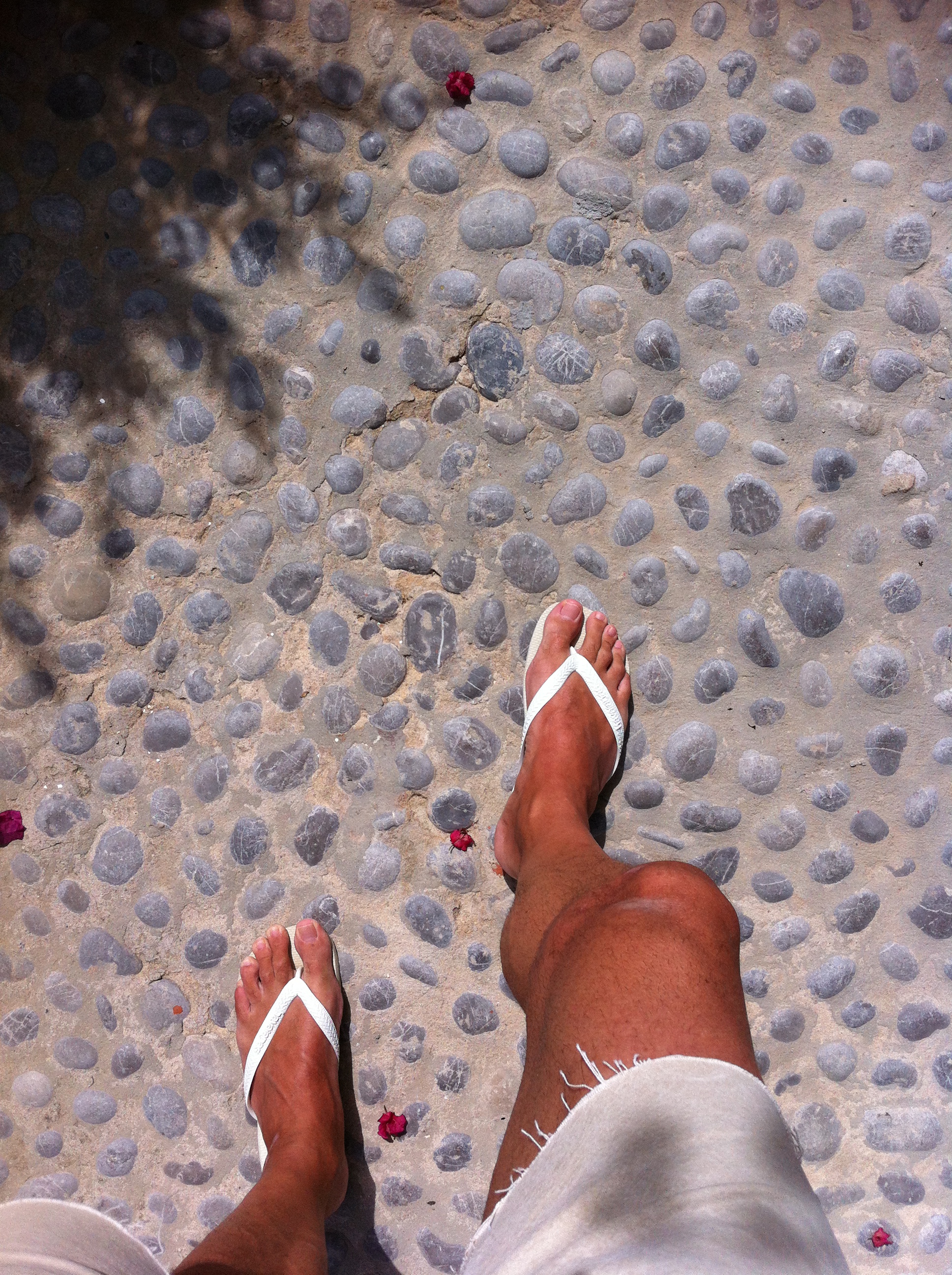
Steps

I walk alone

I walk in company

I walk directionless

I walk with purpose

I walk in the sun,

and in the shade.

Every step nearer to my destination

Every step nearer to that final one I’ll take

So I shall walk

While I can

And be grateful.

IMG_1095

Jack and the Beanstalk – Modern day London remix

I’ve not blogged for a while, a holiday (finally), a short trip back to the UK (again finally) and work got in the way, as well as some evening studies just to completely muddle my brain.  I have also been working on a short story which has now got out of hand and is slowly heading towards (at least) novelette territory.

However, last week back in the UK I came across a book of fairy tales in the second-hand bookshop.  I flicked through and came back home with an idea, which, after my Little Red Riding Hood of last year, I just had to get it down.

Take it away Jack…

____________________________________________________________________________________

Once upon a time, in fact not that long ago, in a small flat overlooking Clapham Junction there lived ateenager called Jack and his single mother, Tracy.  They were poor.  Tracy was on benefit and had a bit of a problem with the vodka so Jack, ever resourceful, had to go out and steal so they could eat.

One day, while out thieving a couple of BLTs from M&S, Jack was caught by the security guard, taken to the office and held while the police came, and eventually they did.  Jack was also linked to a spate of other thefts but they couldn’t prove anything but he still finished the day with the promise of an ASBO over his head.

He was eventually let out but was in tears, as he’d promised his mum he would bring home some supper.  “Nothing for it,” sobbed the young lad, “I’m gonna have to go up Kings Cross and sell a piece of me so we can eat.”

One of the two coppers, big and burly with a sergeant-major moustache and a funny walk, was following him out of the station and overheard his lament.  He tapped him on the shoulder.

“Hello again son,” said the copper.

“Alright sir?” answered Jack.

“Where are you going?” asked the copper.

“I am going to Kings Cross to earn some dough sir.”

“It’s lucky I met you son,” said the copper. “You may save yourself the trouble of going so far, and save you the expense, though I’d bet you would have jumped the train barrier anyway.”

With this, he put his hand in his pocket, and pulled out five curious-looking beans.

“What do you call these, beans?  Ain’t seen nothing like them before,” said Jack.

Yes,” said the copper, “beans, but they’re the most wonderful beans ever known.  If you plant them overnight, by the next morning they’ll grow up and reach the sky. But to save you the trouble of going all the way to Kings Cross, I don’t mind exchanging them for a piece of you,” he said, fiddling his truncheon.

“Done!” cried Jack, who was so delighted with the bargain that after the deed was done he minced all the way home to tell his mother how lucky he had been.

But oh! How disappointed his poor single mother was.

“Off to bed with you, and no PlayStation!” she cried; and she was so angry that she threw the beans out of the window and they landed on the embankment next to the railway line.  Poor Jack went to bed without any supper (not that there was any, apart from the lemon in his mother’s vodka) or PlayStation, and cried himself to sleep.

When he woke up the next morning, the room was almost dark, which even for an English autumn was rare if not impossible at 10.30.  Jack jumped out of bed and ran to the window to see what the matter was.  The sun was shining brightly outside, which was strange for Clapham but from the ground right up beside his window there grew a great beanstalk, which stretched up and up as far as he could see, into the sky.

“I’ll just see where it leads to,” thought Jack, and with that he put on his stolen Reeboks, gangster-boy jeans with the arse down to his knees and a hoody bought in the last winter sale from the nearby camping shop and stepped out of the window and on to the beanstalk, and he began to climb upwards. He climbed up and up, till after a time his block of flats, an eyesore from the 70s, looked a mere speck below, but at last the stalk ended, and he found himself in a new and beautiful country. He immediately looked around for something to steal but there was nothing going.  A little way off there was a great castle, with a broad road leading straight up to the front gate. “I’ll ‘ave some of that.” He said, to no one in particular.  But then a beautiful maiden appeared from nowhere.

“Bleedin’ ‘ell,” he said, “I wish I could do that, I’d ‘ave a few things away I’ll tell ya, luv.”

The maiden winced at the lad’s massacre of the English language.  Staring at his jeans, wondering if in fact Jack was incontinent; after all, why else would they hang so low.  Then she saw his hoody from Millets, felt pity and decided to tell him.

“Hello Jack.”

Jack, not the quickest on the uptake, wondered how she knew his name and then presumed she’d got news of his earlier arrest, soon found out she knew a great deal about him.  She told him how, when he was quite a little baby, his father, a semi-successful drug-dealer, had been slain for trying to rip off the giant who imported directly from Columbia and lived in yonder castle, and how Jack’s mother, in order to save Jack and for a few cases of Smirnoff, had been obliged to promise never to tell the secret.

“All that the giant has is yours,” she said, and then disappeared quite as suddenly as she came.

“She must be a fairy, or there were still some ‘shrooms left over in that tea-pot from Mum’s girly night in,” thought Jack.

As he drew near to the castle, he saw the giant’s wife standing at the door.

“If you please, missus,” said he, “you wouldn’t ‘ave a bite to eat would ya?  I ain’t had nothing to eat since yesterday.”

Now, the giant’s wife, although very big and very ugly, had a kind heart, at least before she got on the Tennents Super, so she said: “Very well little man, come in; but you must be quick about it, for if my husband the giant finds you here, he will beat you up, break your bones and all.”

So in Jack went in, and the giant’s wife gave him a good breakfast, but before he had half-finished it there came a terrible knock at the front door, which seemed to shake even the thick walls of the castle.

“Oh shite, that’s my husband!” said the giantess, in a terrible fright; “we must hide you somehow,” and she lifted Jack up and popped him into the empty kettle.

“Oi!” shouted Jack, scared shitless in the dark.

“Shut up a minute you silly little git,” she said, sticking her finger in the kettle spout and cutting off any sound the saggy arsed-trouser boy could make.  No sooner had she done so the giant roared out:

“Fee, fum, fi, fo;
I smell the blood of a young ASBO;
Be he alive, or be he dead,
I’ll bust his teeth and jump on his head!”

Oh shoosh!” said his wife; “you having a laugh love.  You been on the ale already?  It’s the T-bone steaks you smell.” So the giant sat down, and ate 5 kilos of T-bone with a gallon of home-made ale. When he finished he said:  “Woman, bring me my money-bags.” So his wife brought him two full bags of gold, and the giant began to count his money. But he was so sleepy from the meal and ale that his head soon began to nod, and then he began to snore, like the rumbling of thunder. Then Jack, slipping and sliding with his Reeboks in the copper kettle, crept out, and made off with the two bags, and though the giant’s dog, an enormous Pit-bull, barked loudly, he made his way down the beanstalk back to the flat before the giant awoke.

Jack and his mother were now in the money; she hugged him and after the fourth vodka and tonic told him she loved him.  Jack went down Maccy Dee’s and had a couple of Big Macs to celebrate, before buying an ounce of puff from his classmate.  Things were rosy for a few weeks but his mum’s shopping sprees and nights down the pub along with Jack’s computerised home entertainment fixation soon meant they were down to shopping at Lidl in no time at all so it occurred to him one day that he would like to see how matters were going on at the giant’s castle. So while his mother was away, offering favours to the owner of the local off-licence in the hope of something to drink, he climbed up, and up, and up, and up, until he got to the top of the beanstalk again.

The giantess was standing at the door, just as before, but she did not know Jack, who was more finely dressed than on his first visit. Well, that wasn’t hard, compared to the first time.  Maybe she was dazzled by the bling.  “’Ello missus,” said he, “will you give me some breakfast?”

“Run away,” said she, “or my husband the giant will beat you up, broken bones and all. The last boy who came here stole two bags of gold – off with you!”  But the giantess had a kind heart, although she looked eagerly at her watch, waiting for Tennents hour to arrive, and she allowed Jack to come into the kitchen, where she set before him enough breakfast to last him a week. Scarcely had he begun to eat than there was a great rumbling like an earthquake, and the giantess had only time to bundle Jack into the oven when in came the giant.  No sooner was he inside the kitchen when he roared:

“Fee, fum, fi, fo;
I smell the blood of a young ASBO;
Be he alive, or be he dead,
I’ll bust his teeth and jump on his head!”

But his wife told him he was mistaken, and after breakfasting on a dozen deep-fried chickens and a gallon of home-made ale, he called out: “Wife, bring the little brown hen!”  The giantess dutifully went out and brought in a little brown hen, which she placed on the table.

“Lay!” said the giant; and the hen at once laid a golden egg.  His wife breathed a sigh of relief, glad that he wasn’t referring to her for a quick shag.  “Lay!” said the giant a second time; and the hen laid another golden egg. “Lay!” said the giant a third time; and she laid a third golden egg.

“That’ll do for to-day,” said he, and stretched himself out to go to sleep. As soon as he began to snore, Jack crept out of the oven, went on tiptoe to the table and, snatching up the little brown hen made a dash for the door. Then the hen began to cackle, and the giant began to wake up; but before he was quite awake, Jack had escaped from the castle, and, climbing as fast as he could down the beanstalk, got home safe to his scruffy flat.

The little brown hen laid so many golden eggs that Jack and his mother had now more money than ever but the vodka, designer clothes and bling took their toll once more so, one day, afraid of getting caught stealing or even selling himself in train station toilets, Jack crept out of the window again, and climbed up, and up, and up, and up, until he reached the top.

This time he decided he would have none of that ugly, beastly woman on the doorstep malarkey; so he crept round to the back of the castle, and when the giant’s wife went out to the shed, full of Tennents Super, he slipped into the kitchen and hid himself in the oven. In came the giant, roaring louder than ever:

“Fee, fum, fi, fo;
I smell the blood of a young ASBO;
Be he alive, or be he dead,
I’ll bust his teeth and jump on his head!”

But the giantess was quite sure that she had seen no little boys that morning; and after grumbling a great deal, the giant sat down to breakfast. Even then he was not quite satisfied, for every now and again he would mumble:

“Fee, fum, fi, fo;
I smell the blood of a young ASBO.”

and once he even got up and looked in the kettle. But, of course, Jack was in the oven all the time.

When the giant had finished, he called out: “Wife, bring me the golden harp!”  So she brought in the golden harp, and placed it on the table, turned round and knocked her fifth can of Tennents over the rug. “Wife, you are a drunken bint” said the giant, “start sobering up and get the dinner on or something.  I’m bloody starving!”  Seconds later the harp began to sing the most beautiful songs that ever were heard. It sang so sweetly that the giant soon fell fast asleep, flagon of ale in his hand; then Jack crept quietly out of the oven, and going on tiptoe to the table, seized hold of the golden harp. But the harp at once called out: “Master! Master!” and the giant woke up just in time to catch sight of Jack legging it out of the kitchen-door.

With a fearful roar, he seized his oak-tree club, and dashed after Jack, who held the harp tight, and ran faster than he had ever run before.

“Sod the bleedin’ fags, I need to stop smoking” thought Jack, out of breath after the first fifty yards.  The giant, brandishing his club, and taking massive strides, gained on Jack with every step, who would have been caught if the giant had not tripped over a case of Tennents his wife had hidden, half-buried in the ground.  Before he could pick himself up, Jack began to climb down the beanstalk, and by the time the giant arrived at the edge he was nearly half-way to the horrible, dingy flat he called home.

The giant, not only pissed but also very pissed off, began to climb down too; but as soon as Jack saw him coming, he called out: “Oi Mum, bring us the can of petrol we wanted to burn old Mr. Jacobs from number 76 with!” and the single mother, pissed as a fart but thinking about the longevity of her vodka supply, came out with a gallon of unleaded and a box of Swan Vestas.  Jack had no sooner reached the ground than he chucked the petrol all over the base of the beanstalk and lit a match.  WHOOSH! went the beanstalk, along with Jack’s eyebrows and down came the giant with a terrible crash and made a huge hole in the ground, big enough to be buried in, which is precisely what Jack and his mother did after they went through his rather large pockets to see what they could find, which, apart from a snotty hanky that would have made a bedspread, was nothing.  What became of the giantess and the castle nobody knows, but Jack now had enough money to start dealing, taking over from where his father once left off whilst his mother could now drink enough to be able to spend one month in and three months out of the Betty Ford clinic.  It is supposed they lived happy ever after, especially after moving up-market from Clapham Junction to Tooting Bec. 

Heart full of Words

Tonight, I’m not so bright

Head full of work

Heart full of words

Writer’s block?

Doesn’t exist. Just type

Damn it, type

Anything, everything.


A heart full of words

Can be held back

Only like the sea

or the mighty ocean

can be held back

Dam it at your peril

A dam can be broken.


A heart full of words

like a heart full of soul

a heart full of song

a heart full of faith

will overcome

the head full of work

and make me bright once more.


Waiting Room

Waiting room, full again
Doctor’s patients, my patience
Your sickness, my illness
Your prescription, my medication
Your suffering, my pain
Your temperature, my fever
Your bone is broken, my fever hasn’t
Your chest X-Ray, my chest pain
You cough your heart up
Mine’s about to give up
Your cure from a Chemist’s lab
My end on a Mortician’s slab

+books =Peace (+libros=Paz)

El hombre con un grande corazon. Raul Lemesoff, you are indeed a hero.
A huge thank you also to Doris, for bringing this to my, and therefore your, attention.
Muchas gracias Doris.

My Private Bedlam

My room is cramped
No furniture anywhere
The walls are soft
Like pillows
My cold tea in a plastic cup
My jacket fits
White, if a little tight
My pills are good
I feel no pain
In my private Bedlam
My madness is mine
And mine alone

Are you jealous of me
and my freedom?
You think I should be hidden
That I’m trapped
Soft cell prisoner
Yet every time I close my eyes
I see a myriad of worlds
Where you could never go
Where you do not exist
In my private Bedlam
My madness is mine
And mine alone

The Snowball Effect

I’m sat next to my brief.  My shirt’s the same one I had on yesterday but I’m sure no-one notices.  I have the same, now well-rumpled suit I’ve been wearing throughout my trial; well, they’re not exactly going to let me out shopping at Armani for the day are they?  My shoes are pretty clean though, which is more than I can say for my defence.

The jury has retired for verdict.  My heart is pumping blood at a normal rate around my body.  I’m calm.  What else can I be?  I just look ahead.  I don’t want to see anyone.

They think I killed them all.  Sometimes I think I killed them all.  Sometimes however I believe I only actually killed just one person that day.  For his death they just need to decide whether it was premeditated.  How do you define premeditated?  How long does an action have to be considered and thought-out before becoming premeditated?  5 minutes? An hour?  A day?  I know I didn’t leave the house that morning to walk the dog through the woods, which are separated by a noisy motorway, with the intention to kill someone.  By the time I came home however I was a guilty man.

The prosecution have made a meal out of the fact that I’ve shown no remorse.  I’m not an actor; I can’t show what I don’t have.  Anyway, what came after was an accident, with no intention whatsoever.  However, they don’t see it like that.  They don’t seem to understand the metaphorical snowball effect and all that.  If I hadn’t have rolled that little snowball from the top of the mountain, there wouldn’t have been an avalanche in the valley below, so to speak.  I can sort of see their point, the trouble is they can’t see mine.

Memory can be a bastard.  Why can’t I remember someone’s name from one day to the next yet the filing cabinet of the mind throws out memories from years ago without warning and just at the wrong moment, like when I saw the kid on the bridge.  Some of you might remember this.  I do.  I was a teenager during the miner’s strike back in ‘84 but I still clearly remember how shocked I was when some miners dropped a kerbstone from a bridge at a passing taxi taking a scab to work.  It left me cold then and leaves me cold now.  What a horrible way to die.

So when I saw that kid hoist up to his waist a broken lump of wall, I flipped.  He was so intent on choosing his target that he didn’t see me come down the footpath, pick up a fist-sized flint and step on the bridge.  The block was resting on the handrail of the bridge, against his stomach while he chose his victim. Then I saw what he was waiting for; an Esso petrol tanker was making its way down the slow lane.   I had to stop him.  I threw the stone.

I guess the truck driver saw the kid’s intention as I heard the air horn blare below me.  Too late.  The stone hit the lad in the head.  The lad’s legs gave way as blood poured from his temple.  The brickwork tipped forward with the momentum, his grip didn’t loosen.  Both concrete and kid were gone in a second.  I heard the truck’s brakes howl.  Have you ever noticed how a car’s brakes will squeal in an emergency stop?  A 38 tonne truck’s howl and what a God-awful noise it is, I can still hear it in the long nights in my cell, when sleep evades me.

I felt, rather than saw, the movement of the jack-knifed trailer as it separated from the cab and passed at speed under the bridge, swatting cars like summer flies.  It then hit the central reservation, flip on its end and over, and explode into the oncoming traffic.  The force of the blast rocked the bridge and knocked me to the ground.  The dog came off worse.  She scarpered into the trees from where we’d come from but when I finally found her she was dead.  Internal injuries I suppose.  I cried then.  I showed emotion then.  The families of the 14 that never made it back home that night wouldn’t give a toss about that but then again, why would they?

The jury’s back.  You 9 men and 3 women: penny for your thoughts?  Why am I asking?  It’s the judge that wants to know if they’ve reached a verdict.  They have.  He nods his head slowly.  Putting on his small, wireframe glasses he tells me to stand.

My lifetime freedom for an accident.  I guess the 3 seconds it took me to pick up that stone counts as premeditated.

Become

Here am I
Who am I
In the mirror
My eyes
The eyes of someone
I no longer know
The eyes of someone
Who no longer shows
A light
A smile
I revile, myself
And who I’ve become
No longer one
Who was someone
To care
To share
To bare his soul
Insomnia has left a hole
But hope will not desert me.

Lugano Summer

The heat
The sultry heat
Humidity
Show humility
When my temper frays
And my patience craves
The rain
The wind
And the cooling
Of my soul
The summer lust
The heat-filled dusk
The night
The tortured night

A Wing and a Prayer

Originally to be called Angel Wings when I wrote it yesterday, following a thunderstorm after work, just as I got on the motorbike…nice..  However at 4.30am this morning that title seemed like an old UK advert for a sanitary towel (Sorry Ladies…).

***

This has to be the quietest flight I’ve ever been on.  Even the kids have stopped squabbling.  Thank Heavens for small mercies.

The television screens are showing the ocean beneath, from the cockpit camera.  It’s very blue out there in the tropical sunshine.  Every now and again a ship, possible a huge oil tanker or bulk carrier will pass by, appearing tiny from this distance.  Have you ever looked, I mean really looked, at the ocean from a plane?  The way the sun creates 10,000 mirrors on the surface and how you can see the wave ridges, even from this height.

I’m stuck between members of the Ipod generation.  The skateboard guy to my left has Green Day blaring into his ears, he must be going deaf.  The girl on my other side has some awful rap stuff.  I don’t know what’s worse.  I’ll just go back to looking at the screen.  The book on my lap, The Outsider by Albert Camus, lies upside down and open.  I know it’ll ruin like that but I’m otherwise occupied.

My wife’s in the row behind with the kids.  Every now and again her hand reaches over and caresses my shoulder or my neck.  I reach over and put my hand on hers, giving it 3 squeezes. It means ‘I Love You’.  We’ve always done it.  I’d like to change places with one of my children but they want to stay close to Mum.  I can’t blame them.

An hour ago the pilot took us up to over 40,000 feet to avoid a storm.  40,000 feet!  That’s like sticking the Eiger on top of Everest.  We’re out of the thunderstorm as well, so I guess that’s another small mercy.

This has to be the quietest flight I’ve ever been on.  We were just under a hundred miles from Miami when the storm knocked out our engines.  The guidelines tell us our plane can glide that far.  I continue looking at the screen.  I hope they’re right.

Flash Fiction Friday 094: The Freedom Train by Christopher Farley

Thanks once again Morgen.

morgenbailey's avatarMorgen 'with an E' Bailey

Welcome to Flash Fiction Friday and the ninety-fourth piece in this series. This week’s is a 580-worder (with an American theme – happy Independence Day yesterday everyone) by Christopher Farley.

This story will be podcasted in episode 31 (with three other stories) on Sunday 8th September.

The Freedom Train

He closed his eyes for a second.  He finally began to believe it really was over.  The mountain of lies and the rivers, even oceans, of deceit no longer mattered.  The affair was finally finished and could now be considered a thing of his past, where it should stay.  It had become like a tedious end-of-season football match; neither side wanting to lose but both would be content if the referee blew time.  Each had said their piece and each had gone their separate way.  The thought of returning to his old life before his spree as a shoplifter in the…

View original post 933 more words

The war, Baby.

The lines.  So many of them it seems, interconnected and weaving a spider’s web of expression (exhaustion) on my face.  My face.  My Insomnia.  My card.  I present me and myself to you, my expression (exhaustion) for you to see.  Is it not enough to just get through the day without having killed or been killed, to keep your job, to love your wife/partner/mistress/friends?  What does the world want from me at this hour – always?  Why does it not let me sleep?

We went through the war, Baby.  Almost 15 years, you and I.  Our war.  Troughs deep as trenches, trapping body, poison, blood but offering shelter.  A temporary escape?  Choose the sniper’s bullet or machine-gun mow-down.  The result’s the same.  Bleeding, twitching body on the ground.  Life-draining.

The war Baby.  Those truces. Those long (but not long forgotten) truces.  Not a trough or trench in sight.  Poppy-field sunrise.  Blackbird reveille.  No scars, bullet wounds or barbed-wire kisses. Just us: and the world.  When did you realise that Baby?  Just us.

What doesn’t kill us makes us stronger.

She

She whispers to me

the sound of the spring snowmelt

She holds me

in a snow-chain grip

She loves me

I’m pierced by an icicle

I slide unhindered

on black ice beneath me

Damaged

Would you accept damaged goods?
Would you accept a damaged heart?
Not physically, at least I hope
But damaged in the wars of love

Could, or should I even offer such
What would you think of me?
If I tried to hide the pain and hurt
Pretending nothing ever happened

I’d be like the used-car salesman
Who filled the noisy transmission
with sawdust, to cover up
The damage done before

I’d try plug the radiator holes
But my pain would still seep out
The mileometer I’d try to rewind
But the miles done would remain


Grey sky, leave me

Monday morning, dingy grey

Rain and sleet, sleet and rain

My mood, my being cannot sustain

The will to weather the winter

I wonder whether

I will fade to grey

As will fade this winter’s day

But a ray of light, burning bright

Incandescent, infinite

Crosses the continental divide

Across the ocean, cold and wide

But wider is the chasm without love

When I look upon a grey cloud sky

I should see the blue above

Chains

Chains

Chains around my feet;

age.

Chains around my head;

thought.

Chains around my heart;

friendship.

Chains around my soul;

love.

Post Navigation